Nepal is a country of mountains, ancient cities, diverse cultures, national parks and some of the world's most famous trekking routes. Every year, travelers from around the world come to Nepal to experience the Himalayas, walk through mountain villages, explore UNESCO heritage sites and discover the country's unique hospitality.
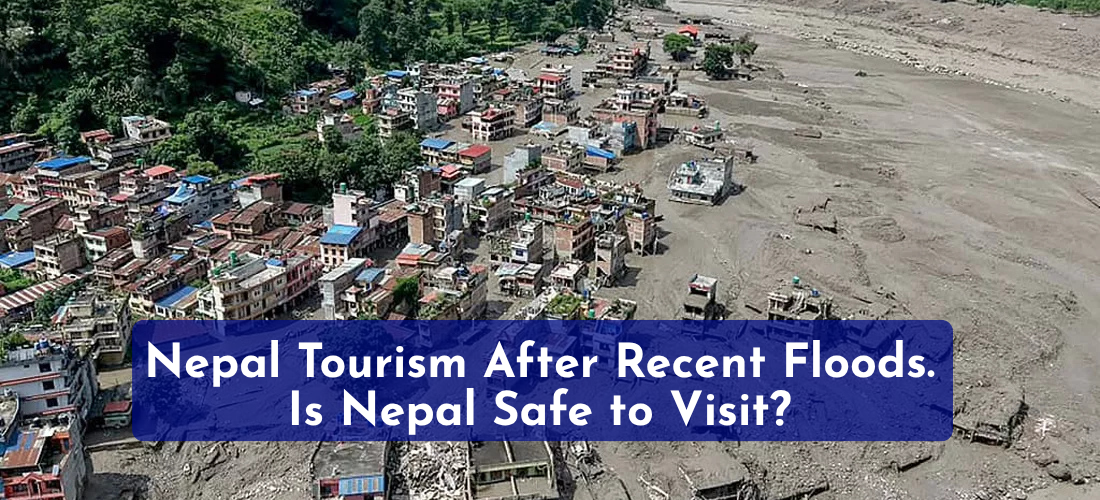
But on August 26, 2026, a devastating flash flood struck parts of Nepal, particularly the Rasuwa and Nuwakot areas, causing extensive loss of life and damage to roads, bridges, settlements and other infrastructure. The disaster also affected neighboring districts along the Bhote Koshi and Trishuli river corridors.
For Nepal's tourism industry, the timing is particularly difficult. International news coverage of the disaster can understandably make potential travelers question whether they should visit Nepal at all.
But there is an important point that international travelers should understand:
Nepal is not just Rasuwa or Nuwakot. Nepal is an entire country with many different tourism regions, trekking routes and destinations.
The conditions in one affected region should not automatically be interpreted as conditions across the whole country.
Understanding the Recent Floods in Nepal
The recent disaster caused severe destruction in areas along the Bhote Koshi and Trishuli river corridors. Rasuwa, Nuwakot and several neighboring districts experienced serious flooding and infrastructure damage.
The Government of Nepal and emergency authorities have been conducting search, rescue and relief operations while assessing the full extent of the damage.
The tragedy has also affected tourism directly. Roads and bridges are essential for connecting Nepal's mountain communities, pilgrimage destinations and tourism businesses, and damage to transportation infrastructure can lead to cancellations, delays and uncertainty for travelers.
A Tragedy That Deserves Attention and Respect
The human cost of the disaster must come first.
Local communities, workers, security personnel and travelers were caught in an extremely sudden natural disaster. The disaster has caused deaths, missing persons, displacement and significant infrastructure damage, while rescue and recovery efforts continue.
For the tourism industry, this is not simply a question of lost bookings. Behind every affected hotel, guide, porter, transport operator and trekking business are people whose livelihoods depend on tourism.
How the Floods Could Affect Nepal Tourism
Natural disasters can have an impact far beyond the area where they occur.
When international travelers see headlines such as “Nepal Floods,” many may assume that the entire country is affected.
This can create several challenges for Nepal's tourism industry.
Fear and Uncertainty Among International Travelers
Travelers planning a holiday or trekking adventure may postpone their plans because they are uncertain about transportation, trekking routes, road conditions, weather, accommodation, emergency services and accessibility of different regions.
These concerns are understandable.
However, the correct approach is not to assume that the entire country has become inaccessible. Instead, travelers should look at the specific destination and route they intend to visit and obtain updated information before traveling.
Impact on Local Tourism Businesses
Tourism supports thousands of people across Nepal.
This includes trekking guides, porters, hotel owners, lodge operators, drivers, domestic airlines, restaurants, local shops, travel agencies and mountain communities.
When international visitors cancel an entire Nepal trip because of an incident in one region, the economic impact can spread to communities that were not directly affected.
Nepal Is Much Bigger Than Rasuwa and Nuwakot
One of the most important things international travelers should understand is Nepal's geography.
Nepal stretches from the lowland Terai to the high Himalayas and contains a huge variety of destinations.
A problem in one corridor does not automatically mean every trekking route, city or tourism destination in Nepal has the same conditions.
The Everest Region
The Everest region is one of Nepal's most famous trekking destinations.
The Everest Base Camp Trek takes travelers through the Khumbu region, with iconic mountain scenery, Sherpa villages, monasteries and spectacular Himalayan landscapes.
The Everest region is geographically distinct from the Rasuwa–Nuwakot corridor. However, travelers should still check the latest weather, flight and trail conditions before departure.
The Annapurna Region
The Annapurna region offers another completely different trekking experience.
Popular routes include Annapurna Base Camp, Annapurna Circuit, Mardi Himal and Ghorepani–Poon Hill.
The region combines mountain scenery with traditional villages, forests, rivers and dramatic Himalayan landscapes.
The Manaslu Region
The Manaslu region is another major trekking area in Nepal.
The Manaslu Circuit Trek takes travelers around Mount Manaslu through remote Himalayan landscapes and culturally rich mountain settlements.
Like every Himalayan destination, conditions can change with weather, landslides and seasonal factors, so route-specific assessment is essential.
Other Parts of Nepal
Nepal's tourism experience extends far beyond trekking.
Travelers can also explore Kathmandu Valley, Pokhara, Chitwan, Lumbini, Bandipur, Mustang, Dolpo, Kanchenjunga, remote mountain communities and cultural and heritage destinations.
This diversity is one of Nepal's greatest strengths.
Does the Recent Flood Mean You Should Cancel Your Nepal Trip?
Not necessarily.
The better question is: Where are you planning to travel, and what are the current conditions on that particular route?
Natural disasters are often geographically concentrated. A flood affecting one river corridor does not mean every part of Nepal is experiencing the same situation.
At the same time, travelers should not ignore the disaster or make assumptions about safety.
Check the Destination, Not Just the Country
Before traveling, visitors should check current local conditions, monitor official travel information, confirm road or flight access, communicate with their trekking agency, check weather forecasts and maintain appropriate travel insurance.
For trekking, route conditions can change quickly, particularly during monsoon and post-monsoon periods.
Why Choosing a Responsible Local Trekking Company Matters
When traveling in a country with challenging geography, choosing an experienced local trekking company can make a major difference.
A local company understands the terrain, transportation networks, seasonal conditions and local communities.
This is where Amazing Nepal Trek & Expedition plays an important role.
Local Knowledge From Nepal
Amazing Nepal Trek & Expedition is a Nepal-based trekking and adventure travel company operating from Kathmandu. The company offers trekking and expedition experiences across major regions of Nepal, including Everest, Annapurna, Langtang and remote areas, as well as travel programs in Tibet and Bhutan.
For international travelers, working with a locally established operator means having people on the ground who can communicate with local guides, transportation providers and communities.
Safety Comes Before the Itinerary
A trekking itinerary should never be more important than the well-being of the traveler.
Amazing Nepal Trek provides information covering trekking safety, travel insurance, flight delays and cancellations and other practical considerations for travelers.
This approach becomes particularly important after a natural disaster.
If conditions change, a responsible trekking operator should be prepared to review the route, communicate clearly with guests and adjust travel plans when necessary rather than simply prioritizing the original itinerary.
Traveling Responsibly After a Natural Disaster
Tourism can be part of Nepal's recovery.
But responsible tourism does not mean ignoring affected communities or pretending that nothing happened.
It means traveling thoughtfully.
Respect Affected Areas
Travelers should not enter disaster-affected areas simply to see the damage.
These locations may still require rescue operations, medical assistance, infrastructure repairs, humanitarian support and emergency transportation.
Always follow local instructions and restrictions.
Support Local Communities
When traveling to unaffected or accessible destinations, visitors can contribute directly to local economies by using local guides, hotels, restaurants, transport services, trekking companies and handicraft businesses.
Tourism can help communities continue earning livelihoods while Nepal works toward recovery.
Nepal's Mountains Are Still Waiting
The recent flood is a painful reminder that Nepal's mountains are powerful and that nature can change rapidly.
But it is equally important not to reduce an entire country to one disaster.
Nepal remains a country of enormous geographical and cultural diversity.
From the Everest region to Annapurna, Manaslu to Mustang, Kathmandu to Pokhara, Chitwan to Lumbini, there are countless experiences across the country.
The right message is not: “Nepal is completely safe.”
The responsible message is: “Understand the conditions, choose your destination carefully, travel with reliable local support and stay informed.”
Travel Nepal With Local Knowledge
For travelers considering Nepal, Amazing Nepal Trek & Expedition believes that responsible adventure begins with good information.
Every journey should be planned according to the destination, season, weather, route conditions and individual travel requirements.
Rather than making decisions based solely on a headline about one affected area, travelers should seek current information about the specific region they intend to visit.
With local experience, professional guides and a wide range of trekking and travel programs across Nepal, Amazing Nepal Trek can help travelers understand their options and plan their journey responsibly.
Final Thoughts: Nepal Is More Than One Disaster
The tragedy in Rasuwa and Nuwakot has affected communities, families and Nepal's tourism industry deeply.
It should not be minimized.
But neither should the rest of Nepal be forgotten.
Nepal is not one road, one valley or one trekking route.
It is a country of diverse landscapes stretching from the Terai plains to the world's highest mountains.
Some areas may require recovery and reconstruction. Other destinations may have different conditions. The key is to understand the difference.
For travelers, the best approach is simple:
Stay informed. Travel responsibly. Listen to local advice. Choose the right destination. And discover Nepal beyond the headlines.
For those planning their next Himalayan adventure, Amazing Nepal Trek & Expedition remains committed to helping travelers explore Nepal responsibly, with local knowledge and careful trip planning.

 (1) (1).jpg)