Visas and Travel Permits
Since the Kailash Mansarovar Tour starts and ends in
Kathmandu, you will need three documents: a Nepal Entry Visa, a Chinese Group
Visa, and a Tibet Travel Permit.
Nepal Entry Visa
You must enter Nepal to begin the trip, and getting a Nepal Visa is very easy.
When you arrive at Kathmandu International Airport, you can get it on the spot
by paying the visa fee and submitting a few documents along with a
passport-size photo.
Chinese Group Visa
Anyone traveling from Nepal to Tibet must have a Chinese Group Visa. This visa
takes about 3–4 working days, so you should arrive in Kathmandu at least 4–5
days before leaving for Tibet. Your tour operator will collect your passport
and documents, submit them to the Chinese Embassy, and you will need to visit
the embassy for biometric processing. The visa is issued for groups of at least
five people and will be returned to you before the journey.
Tibet Travel Permit
A Tibet Travel Permit is required for all visitors to Tibet. Your travel agency
will confirm your itinerary and send your passport copy and documents to the
Tibet Travel Bureau through their local partner. The permit usually takes 9–10
working days to approve. Once you reach Tibet, your guide will give you the
permit.
Transportation from Kathmandu to Muktinath
For this tour, all travel within Nepal—from Kathmandu to
Muktinath—is arranged in a comfortable private 4WD jeep, ensuring a safe and
reliable journey across Nepal’s diverse terrain. The drive begins in Kathmandu
and follows the scenic Prithvi Highway toward Pokhara before gradually
ascending into the Mustang region. As you travel further north, the landscape
shifts dramatically—from lush hills to the barren, windswept valleys of Lower
Mustang.
The road to Muktinath can be rough and rocky in some
sections, which is why a sturdy four-wheel-drive vehicle is essential. Your
experienced driver, familiar with the Himalayan roads, will ensure a smooth and
secure journey to the sacred Muktinath Temple. The private jeep allows
comfortable seating, flexibility for stops, and a more personalized experience
compared to public transport.
This dedicated 4WD service provides both convenience and
safety, letting you relax and enjoy the incredible scenery as you travel toward
one of Nepal’s most important pilgrimage destinations.
Transportation for the Kailash Mansarovar Tour
Your journey begins in Kathmandu, where a Nepalese driver
will take you in a private vehicle to the Kyirong border. After entering Tibet,
you will meet your Tibetan driver, who will then take you to Kyirong town and
continue the drive through Saga, Paryang, and Lake Mansarovar all the way to
Darchen. From Darchen to Sarshung Village—the starting point of the Kailash
Kora—you must use an eco-bus, as private vehicles are not permitted in that
area.
Once the Kora is completed, you will return to Darchen by eco-bus and then
travel back to Kyirong and the Rasuwagadhi border in a private vehicle with
your group. After crossing into Nepal, your Nepalese driver will meet you again
and drive you back to Kathmandu.
Accommodation on the Nepal Side (Kathmandu,
Pokhara & Jomsom)
Accommodation in Nepal offers a comfortable and pleasant
stay before and after your journey to Muktinath. In cities like Kathmandu and
Pokhara, we provide well-selected hotels that offer modern amenities, clean
rooms, hot showers, and reliable services, ensuring a relaxing environment
after long drives. These cities have a wide range of hotel standards, and we
choose the most suitable and comfortable options for your trip.
As you travel further toward the mountains, lodging in Jomsom
becomes simpler. While hotels here are not as luxurious as those in Kathmandu
or Pokhara, they are clean, safe, and equipped with basic facilities such as
warm bedding, attached bathrooms (where available), and hearty meals. The
accommodations are designed to offer comfort in the higher-altitude environment
of Mustang.
If you prefer a single room or wish to upgrade to a
higher-standard hotel, this can be arranged in Kathmandu, Pokhara, and Jomsom
with advance notice and at an additional cost.
Accommodation During the Kailash Mansarovar
Tour
Tibet offers basic lodging rather than luxury stays. In
towns like GKyirong Saga and Darchen, we select the most comfortable and safe
hotels available. In more remote areas such as Mansarovar, Dirapuk, and
Zuthulpuk, accommodations are simple guesthouses with shared rooms and basic
bedding.
If you prefer a single room or better hotel services, upgrades can be arranged
in Kyirong, Saga, and Darchen with advance notice and at an extra cost.
Meal Options
Breakfast is included daily in the tour package, but lunch
and dinner are not, so you can choose meals according to your taste. In
Kathmandu, Kyirong, and Saga, you’ll find many restaurants offering Nepali,
Tibetan, Continental, Chinese, and Western dishes. In Mansarovar, Darchen,
Dirapuk, and Zuthulpuk, you can try simple local Tibetan meals such as butter
tea, tsampa, dumplings, noodle soups, and basic Chinese or Western options like
omelets, fries, pizzas, and pasta.
Tour and Trek Guides
You will be accompanied by experienced local Tibetan guides
who speak English and are well-versed in Tibetan culture, history, and
Buddhism. They will stay with you throughout your time in Tibet, including the
Kailash Kora. These guides are trained to provide safe, supportive, and
professional service. If you ever face a problem during the tour, you can reach
out to your guide or our customer support team.
Fitness Level and Prior Experience
This tour is suitable for travelers with average fitness,
and no previous trekking experience is required. However, preparing through
walking, jogging, or other exercises is recommended. Anyone with existing
health issues should consult a doctor before joining the trip.
During the Kailash Kora, you will trek for 4 to 8 hours a day at elevations
above 5,000 meters, so being physically and mentally prepared is important.
Acute Mountain Sickness (AMS)
Altitude sickness can occur above 3,000 meters, but the
risk is lower on this tour since you gradually ascend by road from Kathmandu
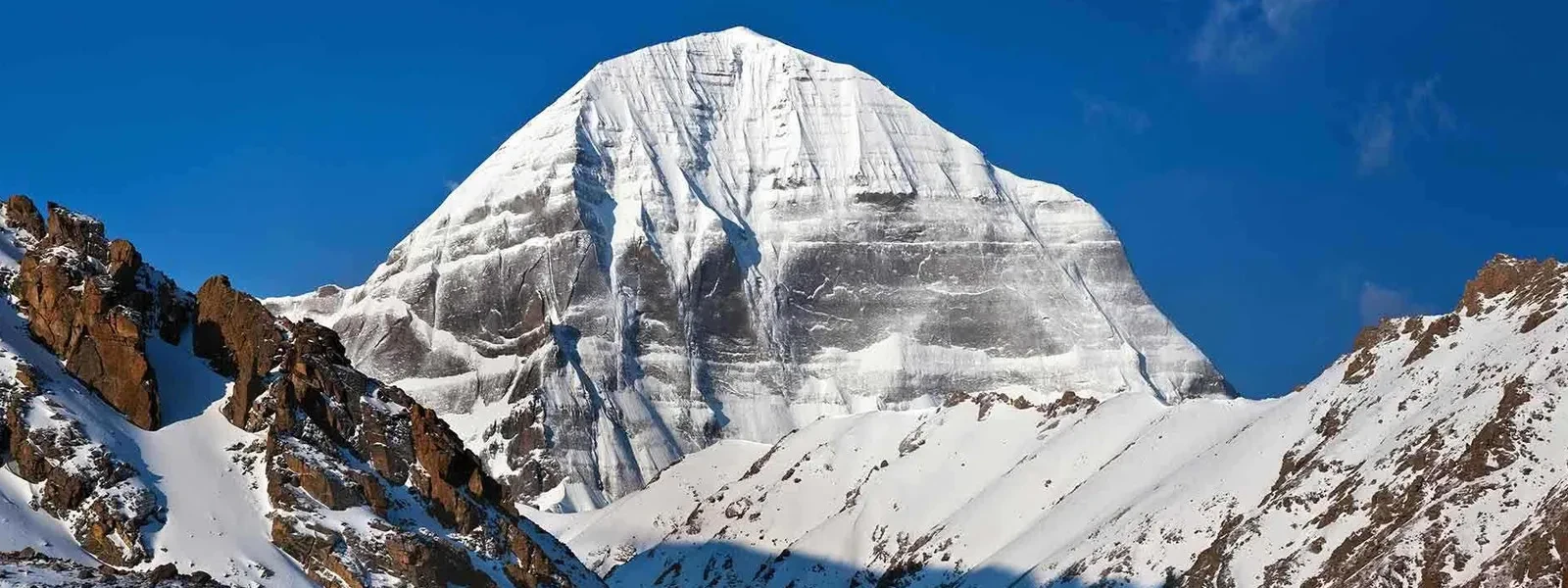
(1,400m). Still, the highest point of the Kora—Drolma La Pass—reaches 5,630
meters, so you must be careful.
Symptoms may include headaches, nausea, shortness of breath, trouble sleeping,
or a rapid heartbeat. Inform your guide immediately if you feel unwell. Staying
hydrated and drinking plenty of fluids is one of the best ways to minimize the
chances of AMS. If any symptons apperead, please talk to your guide.
Important Things to Remember During the Kailash
Mansarovar Tour
- Foreign
travelers are not allowed to travel independently in Tibet; you must be
with an organized group or guide.
- Photography
is restricted inside most monasteries. Always ask for permission before
taking pictures of Tibetan pilgrims, though taking photos from a distance
is generally acceptable.
- Please
avoid carrying or displaying any materials related to the 14th Dalai Lama,
as he is considered a sensitive political figure in Tibet, and such items
are strictly prohibited during the Kailash tour and can lead to serious
legal consequences.
- Swimming
or fishing in Tibet’s sacred lakes is not allowed. You can take a holy bath
in Lake Mansarovar (a permitted spot is allotted).
- Avoid
talking about politics or topics that may be sensitive in Tibet.
- Do
not walk off the main routes or explore unknown trails on your own.
- Help
protect Tibet’s fragile environment by being responsible and respectful.
- Tibetan
Buddhism plays a major role in daily life, so please be mindful and
respectful of local customs and traditions.
- If
you are unsure about anything, consult your guide before deciding or
acting on your own.

 208 Reviews on Tripadvisor
|
208 Reviews on Tripadvisor
|  54 Reviews on Google
|
54 Reviews on Google
|  30 Reviews on Facebook
 (1) (1).jpg)
.png)
.png)