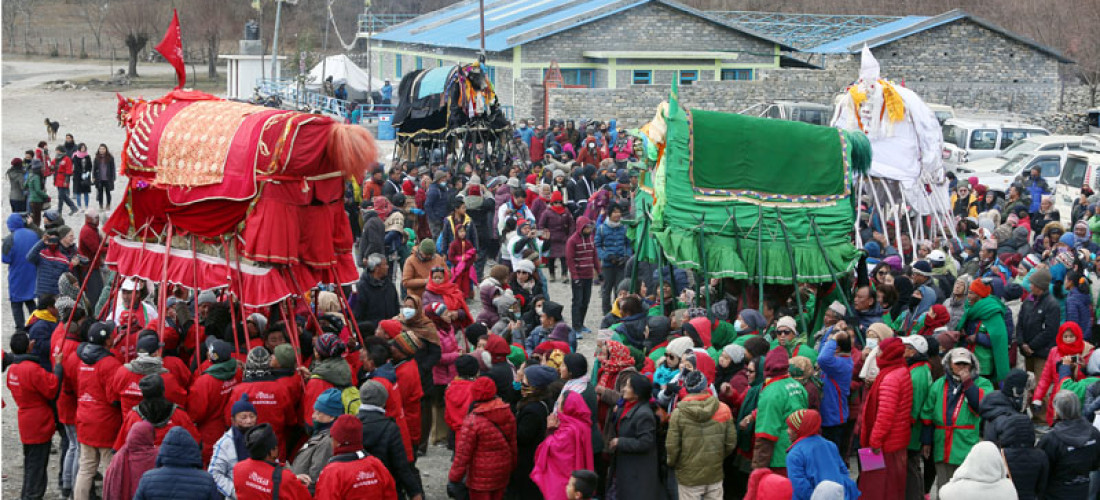
If you spend any real time in Nepal, you start noticing a
pattern.
The big festivals, the ones everyone has heard of, they’re
amazing, sure. Dashain. Tihar. Holi. But they can also feel… wide. Huge.
National. Almost like the whole country is moving at the same rhythm, which is
beautiful, but it’s not always intimate.
Then there are the smaller, local festivals. The ones tied
to one valley, one lake, one community, one specific story. And those are the
ones that tend to stay in your head.
Lha Phewa is like that. It’s closely connected to Phewa Lake
in Pokhara, but it’s not a generic “Pokhara festival” label. It’s more layered
than that. It blends devotion, place based identity, and everyday community
life in a way that feels very Nepal, but also very specific to this corner of
the country.
And that’s why it’s one of the most unique cultural
festivals you can experience here.
So what exactly is Lha Phewa?
Let’s keep it simple.
“Lha” in many Himalayan cultural contexts points toward
deities, divine beings, protective spirits. And “Phewa” is the lake. So even
before you get into details, the name itself carries the idea that this is a
festival about honoring the sacred presence connected to Phewa Lake.
But Lha Phewa isn’t just a ritual stuck in the past. It’s
not a museum piece.
It’s living culture. It’s people showing up because this is
what you do, because your parents did, because the lake feeds livelihoods,
because the gods and the land are not totally separate ideas here. There’s
reverence, but also normal life woven in. Kids running around. Elders directing
the flow. Offerings. Music. Moments of silence. Moments of noise.
And the setting helps. A lot.
Phewa Lake already feels slightly unreal on a clear morning.
The water is calm, the reflections are sharp, and Machhapuchhre sits in the
background like it’s staged for a movie. Now imagine that same landscape with a
festival energy layered on top. That mix of natural beauty and spiritual
attention is part of what makes Lha Phewa stand out.
The lake isn’t just scenery, it’s the main character
In many places, a festival happens near something
beautiful.
Here, the beautiful thing is the reason the festival exists.
Phewa Lake is tied to livelihood and memory. Boats, fishing,
tourism, small vendors, temple visits, family walks, morning prayers, evening
sunsets. For locals, the lake is not only a postcard spot. It’s a presence. A
shared resource. Sometimes even a protector, sometimes something that needs
protection.
So when people gather for Lha Phewa, it can feel like the
community is “checking in” with the lake. Thanking it. Asking for continued
balance. Paying respect to the divine forces believed to inhabit or watch over
the area.
It’s a very grounded type of spirituality. Not abstract.
And honestly, as a visitor, you can feel that difference. It
doesn’t feel like a performance for tourists. It feels like something that
would happen with or without you. You’re allowed to witness it, but it doesn’t
revolve around you.
A festival where culture shows up in small details
One reason people call Nepal culturally rich is because
culture here isn’t only in monuments. It’s in routines. In gestures. In food.
In how elders speak to kids. In what people offer, and how.
Lha Phewa is full of these small details.
Offerings might include flowers, colors, incense, food
items, and other symbolic materials, depending on community tradition and the
specific ritual being performed. You’ll see people dressed in their best, not
always formal in the “ceremony” sense, but clearly intentional. You’ll hear
devotional sounds and conversations mixed together. Someone will be praying
seriously while someone else is laughing two feet away. That contrast isn’t
disrespect. It’s just how real life sits beside faith.
And then there’s the sense of collective movement. People
know where to go, when to stand back, when to step forward. Visitors often
don’t realize how choreographed these gatherings are until they’re in the
middle of one. No loud instructions, no big signs. It’s all social memory.
That’s culture. Quiet, but strong.
It’s not only religious, it’s ecological in spirit too
This part matters more than people expect.
A lake based festival naturally brings up the relationship
between humans and water. In Nepal, especially in hill and mountain regions,
natural sites like rivers, springs, lakes, and forests often have spiritual
value. That spiritual value, in many cases, acts like an old school
conservation system. Not perfect, but powerful.
When a place is sacred, you think twice before abusing it.
So even though Lha Phewa is fundamentally cultural and
spiritual, it also carries an ecological tone. It’s a reminder that this lake
is not infinite, not invincible. It needs care. It needs respect. And
communities that have lived beside it for generations understand that in a way
that doesn’t require modern environmental vocabulary.
As a traveler, this hits differently than reading a sign
about pollution. You’re watching people express responsibility through ritual,
not through a lecture.
The blend of communities makes it feel uniquely Nepali
Pokhara has always been a cultural crossroads. Different
ethnic groups, different histories, different rhythms of life. The city has
grown fast, yes, but underneath that growth, the older community fabric is
still there.
Lha Phewa reflects that layered identity.
You’re not just seeing “one culture.” You’re seeing how
place based festivals gather people across age, occupation, and background.
Locals who are deeply religious. Locals who are not very religious but still
attend because it’s theirs. Families. Priests. Boat operators. Shop owners.
Students.
And then you have visitors who happen to be there, watching
quietly, sometimes joining respectfully.
That mix, when it works, is kind of beautiful. It creates a
feeling that culture is not locked behind a gate. It’s in the open air.
It’s one of those festivals you feel, even if you don’t fully understand it
I’ll be honest. Many travelers want a neat explanation.
“What does this symbol mean?” “Which god is this for?”
“What’s the exact story behind it?”
Those are fair questions. But with festivals like Lha Phewa,
the “why” is not always one clean paragraph. It’s history, oral tradition,
belief, and community practice all tangled together. And sometimes even locals
will explain it slightly differently depending on family tradition.
But you can still feel it.
You can feel when something is done out of habit versus
devotion. You can feel when a crowd is gathered for entertainment versus
reverence. Lha Phewa has reverence in it. Not heavy or intimidating. Just
present.
So even if you don’t catch every detail, you leave with a
sense that you witnessed something real, not packaged.
When should you plan to see it?
Festival dates in Nepal often follow lunar calendars or
local tradition, so they can shift year to year. The smartest approach is not
to guess based on last year’s date you found on some random forum.
If you’re planning a trip around cultural experiences, ask
locally. Ask your hotel. Ask guides. Ask a trekking company that’s actually
based in Nepal and paying attention to what’s happening on the ground.
This is where a local operator can make your life easier,
even if you’re not trekking.
For example, Amazing Nepal
Trek is known primarily for Himalayan adventures and cultural tours, and
that local knowledge matters. Companies like this don’t just know the Everest
Base Camp route. They usually know what’s going on culturally too, what’s worth
seeing, what’s respectful, what’s overcrowded, and what’s quietly special.
And Lha Phewa is quietly special.
How to experience Lha Phewa respectfully? (without overthinking it)
You don’t need to be perfect. You just need to be decent.
A few simple things go a long way.
● Dress
modestly. Not because someone will yell at you, but because it signals respect.
● Ask
before photographing close up rituals or individuals, especially elders or
priests.
● Don’t
block pathways, even if you’re trying to get “the shot.”
● If
someone offers you prasad or a blessing, receive it politely. If you don’t want
it, decline gently.
● Listen
more than you talk. This is not your event, you’re a guest.
Also, one underrated tip. Show up earlier rather than later.
The energy in the early part of a festival day is usually calmer, more
observant, less crowded. You get to see the buildup, not just the peak.
Why Lha Phewa stays with people
Some festivals impress you because they’re loud.
This one stays with you because it’s rooted.
It’s rooted in a lake that holds daily life. It’s rooted in
community memory. It’s rooted in the idea that nature is not separate from
spirit. And it’s rooted in the kind of cultural continuity that Nepal still has
in many places, despite modernization and tourism and everything speeding up.
So if you’re in Pokhara and you get the chance to witness
Lha Phewa, take it. Even if you only understand half of what’s happening. Maybe
especially then.
Because you’ll walk away with something better than trivia.
You’ll walk away with a feeling. A sense of place. And
that’s the whole point of travel anyway, right.
FAQs (Frequently Asked Questions)
What is the significance of Lha Phewa festival in Nepal?
Lha Phewa is a unique cultural festival closely connected to
Phewa Lake in Pokhara, Nepal. It honors the sacred presence and protective
spirits associated with the lake, blending devotion, place-based identity, and
everyday community life. Unlike large national festivals, it offers an intimate
experience rooted in local tradition and spirituality.
How does Lha Phewa differ from other major Nepali festivals like Dashain or
Tihar?
While major festivals such as Dashain and Tihar are
celebrated nationwide and have a broad, collective rhythm, Lha Phewa is a
smaller, local festival specific to the Pokhara region. It focuses on honoring
Phewa Lake's divine presence and reflects the daily lives and traditions of the
local community, making it more intimate and layered.
What role does Phewa Lake play during the Lha Phewa festival?
Phewa Lake is not just a scenic backdrop but the central
figure of the Lha Phewa festival. It symbolizes livelihood, memory, and
spiritual presence for locals. The community gathers to thank the lake, seek
balance, and pay respect to divine forces believed to inhabit or protect it,
highlighting a grounded spirituality intertwined with ecological awareness.
What cultural elements can visitors expect to observe at Lha Phewa?
Visitors will notice rich cultural details such as offerings
of flowers, colors, incense, and food items; people dressed intentionally yet
casually; a mix of devotional sounds alongside everyday conversations; and a
subtle choreography guiding collective movement. These elements showcase how
faith seamlessly coexists with real life in this living cultural festival.
Does Lha Phewa have an ecological aspect beyond its spiritual significance?
Yes, Lha Phewa carries a strong ecological spirit by
emphasizing respect and care for Phewa Lake. In Nepalese hill and mountain
regions, natural sites often hold spiritual value that acts as traditional
conservation systems. The festival reminds communities and visitors alike that
the lake is finite and needs protection through rituals expressing
responsibility rather than formal environmental lectures.
How does Lha Phewa reflect the diverse cultural fabric of Pokhara?
Pokhara is known as a cultural crossroads with various
ethnic groups and histories coexisting. Lha Phewa embodies this layered
identity by bringing together different communities in shared reverence for
Phewa Lake. Despite urban growth, the festival preserves older community
fabrics through collective participation that feels distinctly Nepali yet
specific to this region.


 (1) (1).jpg)