.webp)
How many people have climbed Mount Everest reached a
staggering new milestone in 2025, with nearly 850 successful summits recorded
during the climbing season. On May 18 and 19 alone, 722 climbers reached the
summit from the Nepal side, including 272 foreign clients and 434 guides.
Additionally, about 100 more climbers summited from the Tibet side during the
same period.
These numbers significantly exceed the approximately 600
successful climbs recorded in 2024. Surprisingly, despite the increased traffic
on the world's highest peak, the 2025 Mt Everest climbing season was marked by
improved safety, with only three fatalities compared to 18 deaths in 2023. The
Nepalese government issued around 468 foreign permits for Mt.Everest 2025,
creating a client-to-support ratio of approximately 1:41, with 159 members
supported by 210 Sherpas. In this article, we'll examine what made the 2025
season unique and put these numbers into context with historical data,
considering that as of December 2024, a total of 7,269 individuals had summited
Mount Everest.
How many people summited Everest in 2025?
The 2025 Everest climbing season witnessed remarkable summit
numbers, establishing it as one of the most successful seasons in recent
history. Let's examine the statistics behind this exceptional year.
Summit totals from Nepal and Tibet sides
The final tally for Mount Everest summits in 2025 reached an
impressive total of nearly 850 successful climbs. Breaking this down by route,
Nepal's Department of Tourism confirmed 722 people reached the summit from the
Nepal side. This total comprised 272 foreign clients, 9 Nepali clients, 434
guides, and 7 rope fixers who successfully stood atop the world's highest peak.
Meanwhile, approximately 100 climbers conquered Everest from
the Tibet side, making it a strong year for the northern route after several
seasons of restricted access. Initially, experts had predicted between 700-800
total summits for the season, but the actual figures slightly exceeded these
projections.
May 18-19 proved particularly productive, with at least 213
people summiting on these two days alone. Furthermore, the May 13-14 period saw
another substantial wave of successful climbs, with approximately 54 people
reaching the top as teams capitalized on favorable weather windows.
Comparison with previous years
The 2025 summit count represents a substantial increase over
2024, when approximately 600 climbers reached the top. Looking at the more
precise 2024 figures, there were 861 summits that year, with 787 from Nepal and
74 from Tibet.
In contrast, 2025 didn't quite reach the pre-pandemic record
established in 2019, when 877 total summits were recorded (661 from Nepal and
216 from Tibet). Nevertheless, 2025 firmly established itself as part of the
post-pandemic recovery trend in Everest climbing.
Nepal's Department of Tourism issued 456 foreign climbing
permits in 2025, just shy of the record 479 permits granted in 2023. According
to another source, the figure was closer to 468 foreign permits. Either way,
these numbers reflect continued high interest in climbing Everest from the
Nepal side.
Breakdown by climbers and Sherpas
The balance between foreign clients and Nepali support staff
remains a defining characteristic of Everest expeditions. On the busiest days
of the 2025 season, the client-to-support ratio stood at approximately 1:1.41,
with 159 members supported by 210 Sherpas or support climbers.
This ratio reflects a broader historical trend. Since
Everest was first summited in 1953, a total of 7,269 different people have
reached the top 12,884 times. Of these, 6,097 Sherpas have summited compared to
5,899 members (non-Sherpa climbers), with this gap growing wider each year.
Women continue to make their mark on the mountain as well.
As of the end of 2024, there had been 962 summits by women members, a number
that undoubtedly increased with the successful 2025 season.
Overall, the 2025 climbing season not only added hundreds of
new names to the list of successful Everest climbers but also reflected
evolving patterns in how the mountain is climbed. The growing predominance of
Sherpa summits over member climbers indicates the vital role these local
experts play in making Everest accessible to international climbers.
The key summit days and weather windows
Weather played a decisive role in the 2025 Mt. Everest
climbing season, creating both opportunities and challenges for climbers
seeking to reach the world's highest peak. Unlike previous years, the 2025
season featured condensed summit windows, requiring precise timing and careful
planning from expedition teams.
May 18–19: The main summit window
The 2025 climbing season saw most successful ascents
concentrated in a few key days, with May 18-19 emerging as the primary summit
window. On May 18 alone, 165 climbers reached the summit, followed by 104 the
next day. In total, at least 213 people summited Everest on these two days
across both the Nepal and Tibet sides.
Several expedition companies reported significant success
during this narrow window:
·
Climbing The Seven Summits: 30 summits on May 15
·
Seven Summit Treks: 22 summits (10 clients with
12 Sherpas)
·
Elite Expeditions: 39 summits (12 clients with
27 Sherpas)
·
8K Expeditions: 21 climbers to Everest summit,
with 9 continuing to Lhotse
Consequently, these concentrated summit attempts created the
infamous "Everest traffic jam," with hundreds of climbers and guides
packed along the route between Camp II and the summit. Photos captured the
scene showing climbers ascending the Lhotse Face "like an army of
ants", a vivid illustration of the crowding that occurs when weather
forces everyone to climb on the same days.
Impact of jet stream winds
The 2025 season was profoundly affected by what
meteorologist Chris Tomer described as "a partial jet stream playing hide
and seek on Everest's summit from 5/10-5/25". This atmospheric phenomenon
created persistent strong winds above Camp 4 to the summit throughout much of
the climbing season.
The Subtropical Jet Stream, typically positioned between
latitudes 25°N and 35°N (with Everest at 28°N), fluctuates in elevation from
near Everest's height (29,032') to 39,000'. While it normally passes over
Everest briefly during late April and May with winds reaching 80 mph or higher,
the 2025 season saw an unusual pattern.
A thin band of winds (40-60 mph) positioned just above
Everest's elevation frequently "mixed down" to the summit and higher
camps. The period from May 21-25 proved especially tricky, with forecast models
showing safe conditions only to have those windows disappear rapidly. Indeed,
the jet stream didn't fully move off the summit until May 26-29, finally
revealing the season's lightest winds.
How weather shaped the season?
The volatile weather pattern fundamentally shaped the rhythm
of the entire climbing season. Although several climbers reached the summit in
mid-May, deteriorating conditions forced many to retreat to base camp. This
included Kami Rita Sherpa, who was attempting his record 31st summit.
Expedition leaders identified several potential summit
windows throughout the season—May 14, 15, 17, 18, 23, and 24—based on forecasts
from weather experts at base camp. However, these predictions proved
challenging as conditions changed rapidly without warning.
"The weather was very difficult to predict,"
explained six-time Everest summiteer Jenjen Lama. "The forecast would be
great for the following day, but on the day the weather would deteriorate every
hour or so".
This unpredictability created a ripple effect throughout the
season. Poor conditions in early May pushed most teams toward the May 18-19
window, creating the concentrated crowds. The season concluded with the threat
of a tropical cyclone from the Bay of Bengal bringing heavy snow accumulation
across the Everest region on May 30-31.
For climbers hoping to join the ranks of those who have
successfully climbed Mount Everest, the 2025 season offered a stark reminder:
on the world's highest peak, timing is everything, and the weather remains the
ultimate arbiter of success.
Notable climbers and record attempts
Beyond the impressive summit totals, the 2025 Everest season
featured several remarkable individual achievements and record attempts that
pushed the boundaries of human endurance on the world's highest peak.
Kami Rita Sherpa's 31st summit
Famed Sherpa guide Kami Rita Sherpa cemented his legendary
status on May 27 when he reached Everest's summit for an extraordinary 31st
time. At 55 years old, he guided a 22-member Indian Army team to the top via
the southeast ridge route. His remarkable climbing career spans over three
decades, having first summited Everest in 1994 at age 24. Throughout his
career, Kami Rita has made the journey nearly every year, occasionally
completing two climbs in a single season. His closest competitor, fellow Sherpa
Pasang Dawa, trails with 29 ascents.
Tashi Gyalzen Sherpa's 4 summits in 15 days
Perhaps the most astonishing feat of the season came from
29-year-old Tashi Gyalzen Sherpa, who accomplished what many considered
impossible - summiting Everest four times in just 15 days. His historic
sequence began May 9 with the rope-fixing team, followed by additional summits
on May 14, May 19, and finally May 23. "This is a world record and a new
limit of human endurance," noted Pemba Sherpa of 8K Expedition. For Tashi,
these represented his fifth through eighth Everest summits overall.
Tyler Andrews and Karl Egloff speed attempts
The mountain also witnessed ambitious speed record attempts
by American Tyler Andrews and Swiss-Ecuadorian Karl Egloff. Both aimed to break
the no-oxygen speed record from Base Camp to summit (20 hours and 24 minutes)
set by Kazi Sherpa in 1998. Andrews made three separate attempts, with his
final push on May 27 taking him to within 1,500 feet of the summit before
fatigue-induced hallucinations forced his retreat. Egloff made a single attempt
on May 23 but turned back near Camp III amid heavy winds.
Mission: Everest rapid ascent team
In a groundbreaking achievement, the Mission: Everest
team—four British military veterans—traveled from London to Everest's summit
and back in just seven days. Their expedition utilized innovative
pre-acclimatization methods, including sleeping in hypoxic tents and the
controversial pre-administration of xenon gas. The team summited on May 21
after narrowly avoiding an avalanche in the Khumbu icefall. Their expedition
raised funds for veterans' charities while demonstrating a new approach to
high-altitude mountaineering. Subsequently, American-Ukrainian climber Andrew
Ushakov claimed an even faster feat, reportedly going from New York to summit
in under four days using similar pre-acclimatization techniques.
Deaths and safety incidents on Everest in 2025
Despite the impressive number of people who have climbed
Mount Everest in 2025, safety remained a primary concern. The season showed
remarkable improvement in climber safety with fewer fatalities than previous
years.
Total fatalities and causes
The 2025 Everest season recorded five fatalities on the
Nepalese side, down from eight deaths in 2024 and significantly lower than the
record-breaking eighteen deaths in 2023. Remarkably, no deaths were reported
from the Tibet side. This total is below the historical average of seven
fatalities per year since 2010.
Among the five deaths, three occurred above Base Camp:
Filipino climber Philipp II Santiago died at Camp IV after showing signs of
exhaustion, Indian climber Subrata Ghosh died near the Hillary Step after
summiting, and Pen Chhiri Sherpa suffered cardiac arrest at Camp I. Two
additional Nepali workers died at Base Camp: Lha Ngima Sherpa from altitude
sickness and Ngima Dorje Sherpa from a brain hemorrhage.
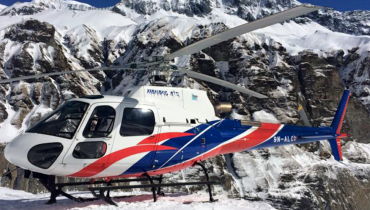
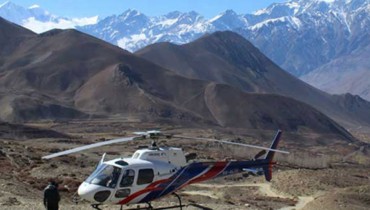
Helicopter rescues from Camp III
A defining safety advancement of the 2025 season was the
increased use of helicopter rescues from Camp III at 23,500 feet (7,162
meters), pushing the boundaries of aviation capabilities in thin air. These
complex operations involved long-line rescues where patients were secured to
ropes dangling beneath helicopters rather than traditional landings.
Captain Maurizio Folini performed multiple rescues from Camp
III, including saving a Czech climber with severe pulmonary edema who
"would not have survived the night" according to expedition
operators. Similarly, Captain Bibek Khadka conducted another successful Camp
III rescue.
How safety improved this season?
Several factors contributed to 2025's improved safety
record. First, the condensed summit window meant fewer teams attempted
early-season ascents in potentially dangerous conditions. Second, expedition
operators fully stocked Camp IV with oxygen supplies.
Moreover, Global Rescue deployed specialized medical and
rescue teams, responding to over 100 rescue calls in May alone. Their teams
performed up to 25 rescues in a single day during peak activity.
Additionally, new safety measures implemented for 2025
included mandatory GPS trackers or RECCO reflectors for all climbers to assist
in locating missing persons. Furthermore, Nepal's ban on solo expeditions and
stricter guide-to-climber ratios (1 guide per 2 climbers above 8,000 meters)
helped filter out inexperienced climbers.
What made 2025 different from other years?
The 2025 Everest season stood out for several unique factors
that reshaped how climbers approached the world's highest peak. These changes
ranged from weather challenges to innovative climbing methods.
Condensed summit window
Unpredictable jet stream patterns fundamentally altered the
2025 climbing calendar. Unlike typical seasons with 6-16 summit days (averaging
11 since 2001), 2025 featured remarkably few safe climbing windows. This
atmospheric phenomenon created persistent strong winds above Camp 4, forcing
climbers to adjust plans or abandon summit pushes altogether. With the jet
stream "playing hide and seek" on Everest's summit throughout
mid-May, expedition leaders had to make difficult decisions about when to
attempt the summit. This weather volatility compressed hundreds of climbers
into the same narrow timeframes, particularly May 18-19, creating the notorious
"conga-line" effect on the mountain's upper slopes.
Use of oxygen and pre-acclimatization
Pre-acclimatization techniques notably evolved in 2025, with
climbers employing increasingly sophisticated methods. Most controversial was
the xenon gas experiment conducted by Furtenbach Adventures, where four British
military veterans completed a London-to-summit-and-back journey in just seven
days. Andrew Ushakov reportedly achieved an even faster sea-level-to-summit
ascent in under four days using hypoxic pre-conditioning. Beyond these extreme
examples, many climbers turned on oxygen earlier than in previous years—some
reportedly leaving Base Camp with masks already in place. The traditional
approach of reaching South Col before using supplemental oxygen became
increasingly rare.
Crowd management and permit data
Nepal issued 517 climbing permits for spring 2025, marking a
15% increase from the previous year. Alongside this surge, permit fees rose
significantly from $11,000 to $15,000. With over 1,000 climbers and Sherpas
crowding the route, bottlenecks at critical sections like the Hillary Step
became inevitable. Full expedition costs ranged from $45,000 for budget
operators to over $200,000 for luxury services. Notably, 2025 also saw the
introduction of draft legislation requiring future Everest climbers to have experience
on at least one 7,000-meter Nepalese peak. This measure aims to reduce
overcrowding and improve safety on the mountain where queues in the "Death
Zone" have contributed to fatalities in recent years.
Conclusion
The 2025 Everest climbing season certainly stands out as
remarkable in the mountain's storied history. Despite challenging weather
conditions that compressed climbing windows, nearly 850 individuals
successfully reached the summit - a significant increase from approximately 600
climbers in 2024. Though crowds concentrated during the May 18-19 window
created the infamous "traffic jams," safety actually improved
considerably, with fatalities dropping to just five compared to eighteen in
2023.
Several factors undoubtedly contributed to this improved
safety record. Enhanced helicopter rescue capabilities at Camp III saved lives
that would have been lost in previous years. Additionally, mandatory GPS
trackers, stricter guide-to-climber ratios, and better-stocked oxygen supplies
at higher camps all played crucial roles in protecting climbers.
The season likewise witnessed extraordinary individual
achievements. Kami Rita Sherpa secured his place in mountaineering history with
an astonishing 31st summit, while Tashi Gyalzen Sherpa redefined human
endurance by reaching the summit four times in just 15 days. Furthermore,
innovative pre-acclimatization techniques allowed for unprecedented rapid
ascents, exemplified by the Mission: Everest team completing their journey from
London to summit and back in merely seven days.
Beyond these accomplishments, 2025 marked a pivotal year for
Everest climbing policies. Nepal's increased permit fees and proposed
experience requirements signal attempts to address overcrowding concerns. These
changes, coupled with evolving acclimatization approaches and rescue
capabilities, suggest future Everest seasons will continue transforming.
As we reflect on these developments, one thing remains
clear: Everest continues to captivate the human imagination while pushing the
boundaries of what climbers can achieve. The mountain still demands respect -
yet with improved safety measures, technological advances, and evolving
climbing strategies, more people than ever before can now stand atop the
world's highest peak.
FAQs
Q1. How many people successfully climbed Mount Everest in 2025?
Nearly 850 climbers reached the summit of Mount Everest in 2025, with 722
summiting from the Nepal side and approximately 100 from the Tibet side. This
marked a significant increase from the previous year's total of about 600
successful climbs.
Q2. What were the main challenges faced by climbers during the 2025 Everest season?
The 2025 season was characterized by unpredictable
weather patterns, particularly a fluctuating jet stream that created strong
winds above Camp 4. This resulted in condensed summit windows, forcing hundreds
of climbers to attempt the climb during the same narrow timeframes, especially
on May 18-19.
Q3. Were there any notable achievements or records set during the 2025 Everest season?
Yes, several remarkable feats were
accomplished. Kami Rita Sherpa reached the summit for the 31st time, while
Tashi Gyalzen Sherpa summited four times in just 15 days. Additionally, a team
of British military veterans completed a London-to-summit-and-back journey in
only seven days using innovative pre-acclimatization techniques.
Q4. How did the safety record on Everest compare to previous years?
The 2025 season saw a significant improvement in safety, with only five
fatalities reported on the Nepalese side, compared to eight in 2024 and
eighteen in 2023. This improvement was attributed to factors such as enhanced
helicopter rescue capabilities, mandatory GPS trackers, and better-stocked
oxygen supplies at higher camps.
Q5. What changes were implemented or proposed for Everest climbing in 2025?
Nepal increased climbing permit fees from $11,000 to $15,000
and introduced draft legislation requiring future Everest climbers to have
experience on at least one 7,000-meter Nepalese peak. Additionally, there was a
ban on solo expeditions and stricter guide-to-climber ratios were implemented
to improve safety and manage overcrowding on the mountain.


 (1) (1).jpg)