Every spring, the same question pops up. Sometimes it’s asked with pure curiosity, sometimes with a little disbelief.
How many people actually made it to the top of Mount Everest this season?
And for Spring 2026 specifically, it’s a fair question, because the numbers matter in a bunch of ways. They hint at crowding. They hint at safety. They hint at how busy the Khumbu felt, how much pressure was on guides and Sherpa teams, and honestly, what kind of experience climbers probably had up high.
But here’s the slightly frustrating truth right at the start.
As of now, there isn’t a single official, complete, universally agreed “Spring 2026 summit total” published in one clean place that you can trust without caveats.
Not because people are hiding it. It’s just how Everest reporting works in real life. Summit claims come from many expedition operators. Some are reported immediately. Some are confirmed later. Some get double counted in early roundups. Some never make it into public databases until weeks or months after the season ends.
So instead of pretending there’s one magic number carved into stone, let’s do this properly. The way a human would actually figure it out.
We’ll cover:
- What “Spring 2026” even means on Everest?
- Why the summit count is always a moving target at first?
- Where the final number usually comes from?
- What you can realistically say about Spring 2026 summit totals right now?
- And what it means for future climbers and trekkers in the Everest region?
Spring Everest seasons are weirdly “countable” but not simple
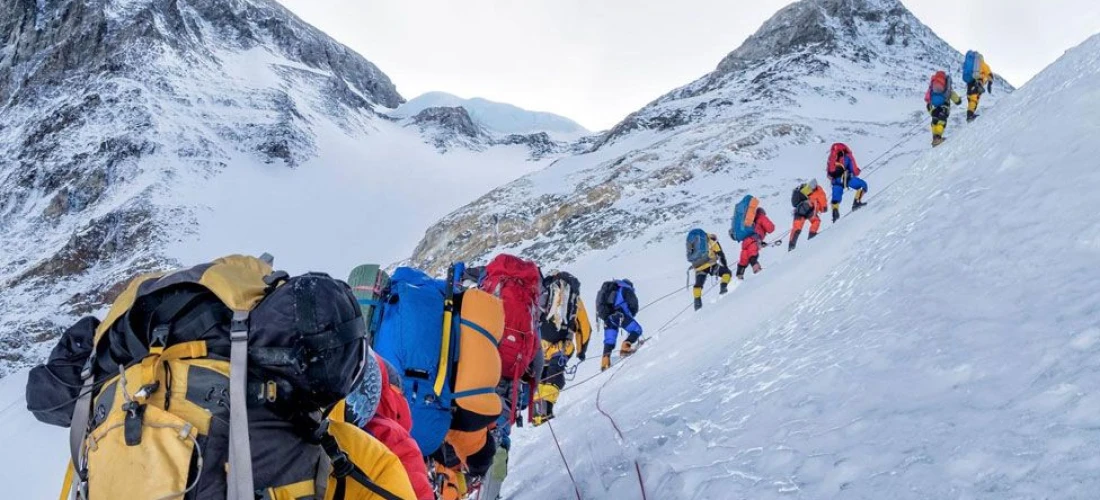
Spring on Everest usually means April to late May, sometimes early June if the weather lets teams hang around. The main summit windows are typically in May, when jet stream winds lift just enough for safe(ish) pushes.
In theory, counting summits should be straightforward.
Someone reaches the top. You tick a box.
In practice, the same summit might be reported:
- by the climber
- by their operator
- by a media outlet repeating the operator
- by a government contact
- by a database like the Himalayan Database, later
And early on, those streams don’t line up perfectly. That’s where the confusion comes from.
Also. There’s the Tibet side.
Most public “spring season” chatter is Nepal side because it’s louder, more operators, more media. But summits happen from both the south (Nepal) and north (Tibet) in many years, depending on access and permits.
If you’re asking “How many summited Everest in Spring 2026?” you really want total summits from both sides, but many early reports are only Nepal side or only include the biggest teams.
So what’s the actual number for Spring 2026?
If you are looking for a single confirmed final total, you typically have to wait for:
- Nepal’s season wrap reporting (which can still be incomplete)
- operator-by-operator confirmations
- and then the Himalayan Database update, which is the closest thing to a gold standard for historical counting
That last one matters because it cleans up duplicates and verifies names, routes, dates, outcomes. It’s not instant.
A practical way to phrase it (without making things up)
Right now, the most accurate thing to say in an article like this is:
Spring 2026 summit totals are not yet available in a single final verified figure that’s universally cited, because official and database-level confirmations usually lag the season.
I know that’s not the satisfying one-line answer people want. But it’s the honest one.
What you can do, though, is track the likely range based on how Everest seasons usually play out and how summit reporting stacks up each year.
Which brings us to the next point.
Why Everest summit numbers are almost always revised later
A few reasons, and they’re not dramatic. Mostly boring logistics.
1. Duplicate reporting and “team” reporting
Operators will say “Our team summited” and list a number. Media repeats that number. Then later you get individual names and realize that some climbers switched support (yes, that happens), or two operators collaborated and both counted the same clients in an early headline.
2. Timing differences
Some climbers summit May 12. Another wave May 13. Another May 18. It all blurs together in social posts, and early totals might only reflect the first big weather window.
3. Route and side separation
South side and north side totals get mixed, or one side is ignored. You end up with people arguing online when they’re not even talking about the same dataset.
4. What counts as a summit?
This sounds obvious but it’s not always. The true summit is a small dome, and in poor visibility or heavy traffic, a few people turn around slightly short. Some will claim the top anyway. Most reputable operators do not play games with this, but the internet is the internet.
5. Deaths, rescues, and incomplete debriefs
Sadly, Everest seasons include incidents. When teams are managing an emergency, paperwork and public updates are not the priority. Final reporting comes later.
Where the “final” Everest summit count usually comes from?
If you’re trying to verify the Spring 2026 summit number when it does settle, these are the typical sources people use:
The Himalayan Database
This is the long running historical record used by researchers. It’s not perfect, but it’s the most consistently referenced dataset for expedition outcomes on the big peaks. Updates are not immediate, and that’s fine. Accuracy takes time.
Nepal tourism authorities (permit and peak season wrap)
Nepal’s government publishes permit numbers and sometimes a season summary. Permit numbers are not summit numbers, though. Plenty of people with permits never summit.
Expedition operators and aggregator reports
Large operators, guide collectives, and climbing news sites compile totals. These are useful for “this is what happened this season” stories, but they still may not be the final cleaned figure.
If you’re reading a one-line tweet with a number and no methodology, treat it like a draft. Not a record.
What we can reasonably infer about Spring 2026 without pretending?
Even without a single final number in hand, a few things can still be said sensibly.
Spring summit totals tend to be high in modern Everest seasons
In the last decade, Everest has seen multiple seasons with very high summit success counts in spring. That’s due to:
- better forecasting and route fixing
- more experienced logistics operators
- more Sherpa support
- more oxygen use and higher flow rates
- and, bluntly, more people attempting the mountain
So it’s unlikely Spring 2026 was a “tiny” summit year unless there were unusual closures or prolonged bad weather windows. If conditions and access were typical, the total would likely fall in the modern high range.
But again. Likely range is not the same as confirmed.
The more important number for most readers is not “summits” anyway
If you’re a future climber, you care about summit totals because they correlate with crowding in the summit windows.
If you’re a trekker, you probably care because it affects:
- flight traffic to Lukla
- lodge availability on the EBC trail in peak weeks
- the general busyness of Namche, Dingboche, Lobuche, Gorak Shep
- and the overall feel of the region in April and May
Summit totals are kind of the headline. The ripple effects show up much lower down.
Crowd pressure starts way below the summit
This is the part people miss. The “Everest season” is not just Camp 4 and the Hillary Step area.
It’s the entire Khumbu pipeline.
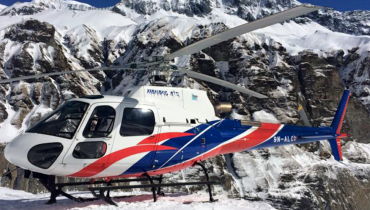
The early season changes the vibe of the Everest Base Camp trek too. More helicopters. More large groups. More supply movement. More people on acclimatization hikes near Dingboche or up toward Nangkartshang Peak. More noise at certain points, less of that quiet mountain feeling, at least in the busiest weeks.
And if you are trekking in Spring, you feel it. Even if you never go near Base Camp itself.
If you’re planning Everest Base Camp in spring, what should you do with this information?
Not everyone reading this wants to climb Everest. Most people don’t. They want the Everest region experience, and the Base Camp trek is the classic way to do it.
So here’s the practical takeaway.
1. Don’t pick trek dates based only on summit counts
Summit counts are an output. The trail crowding is driven by:
- peak trekking season (March to May)
- school holiday timing for some countries
- flight reliability to Lukla
- and how many big agencies are running groups that month
You can have a season with a lot of summits but your trek week is still chill. Or the opposite.
2. Choose a company that’s good at pacing and altitude management
Crowding is annoying. Altitude sickness is the real problem.
A properly planned Everest Base Camp itinerary with acclimatization days, conservative ascent rates, and guides who actually watch your symptoms beats any “fastest EBC trek in 9 days” marketing.
This is where a strong local operator makes a difference, because they see the mountain and the trail every season, not as a once a year product.
A quick note on Amazing Nepal Trek (and why local matters here)
If you’re looking at Everest Base Camp treks and you want a team that actually knows the region deeply, Amazing Nepal Trek is one of the local companies people often feel relieved they chose.
Not because they promise something unrealistic. More because they focus on the stuff that quietly makes or breaks a trek:
- Experienced local guides and Sherpa support teams who know the trail conditions and the people running lodges
- Carefully planned Everest Base Camp itineraries that don’t treat acclimatization like a checkbox
- Strong safety and altitude management practices, and guides who take pacing seriously
- Private or group treks, depending on whether you want flexibility or a social vibe
- Transparent pricing, which matters a lot in the Khumbu where “optional” costs add up fast
- 24/7 support before and during the trek, which sounds like marketing until your Lukla flight gets delayed and you need quick decisions
- Responsible tourism practices that keep money in local communities and reduce avoidable trail impact
And honestly, one underrated thing. A local company tends to give you a more real version of the Everest region. Not just the photo stops. The small cultural moments. The rhythm of the villages. A better feel for what the Khumbu is, outside of the Everest brand name.
So when will we know the true Spring 2026 summit number?
Usually, the clearest final totals appear after:
- expeditions fully return and debrief
- operators publish full rosters and outcomes
- and the Himalayan Database updates its records for the year
If you want to publish the number on your site and keep it accurate, the best approach is:
- Publish this article now with the “not yet fully verified” framing.
- Add a simple update line later: “Update: The confirmed Spring 2026 total is X, based on Y source.”
- Link to the source and date it.
That’s how you avoid spreading a number that looks clean but is actually half baked.
The real answer, in one sentence (and it’s not flashy)
The exact number of climbers who summited Mount Everest in Spring 2026 is not yet available as a single final, fully verified total in the public record, because summit reporting is compiled and corrected after the season by operators and databases.
Annoying, yes. But accurate.
And if you’re reading this because you’re planning your own Everest region trip, you’re already thinking the right way. Look past headlines. Focus on timing, itinerary quality, acclimatization, and who you trust on the ground.
That stuff matters more than any single number.
FAQs (Frequently Asked Questions)
What does 'Spring 2026' mean in the context of Everest climbing seasons?
'Spring 2026' on Everest typically refers to the climbing season from April to late May or early June, depending on weather conditions. This period includes the main summit windows in May when jet stream winds lessen, allowing safer summit attempts.
Why is there no single official total for Everest summits in Spring 2026 yet?
There isn't a single official, universally agreed-upon summit total for Spring 2026 because summit claims come from various expedition operators, media outlets, government contacts, and databases. These reports often arrive at different times, may overlap with duplicate counts, and require verification, which delays final consolidated numbers.
How are Everest summit numbers usually verified and finalized?
Final Everest summit counts are typically verified through multiple sources including Nepal's season wrap reporting, operator-by-operator confirmations, and updates to the Himalayan Database. The Himalayan Database is considered the gold standard as it cleans up duplicates and verifies climber details but updates are not immediate to ensure accuracy.
What factors cause Everest summit numbers to be revised after initial reports?
Summit numbers are often revised due to duplicate reporting by operators and media, timing differences between summit waves, mixing of south (Nepal) and north (Tibet) side totals, disputes over what counts as a true summit, and delays caused by deaths, rescues, or incomplete debriefs during the season.
Do Everest summit totals include climbs from both Nepal and Tibet sides?
Yes, a comprehensive Everest summit total for Spring 2026 would include summits from both the south side (Nepal) and north side (Tibet). However, early reports often focus mainly on the Nepal side due to more operators and media presence there.
Where can I find reliable data on Everest summits after the Spring 2026 season ends?
Reliable data on Everest summits post-Spring 2026 will come from official Nepal tourism authorities' season summaries and especially from the Himalayan Database updates. While permit numbers are published earlier, they do not equate to successful summits. Final verified figures usually become available weeks or months after the season concludes.


 (1) (1).jpg)