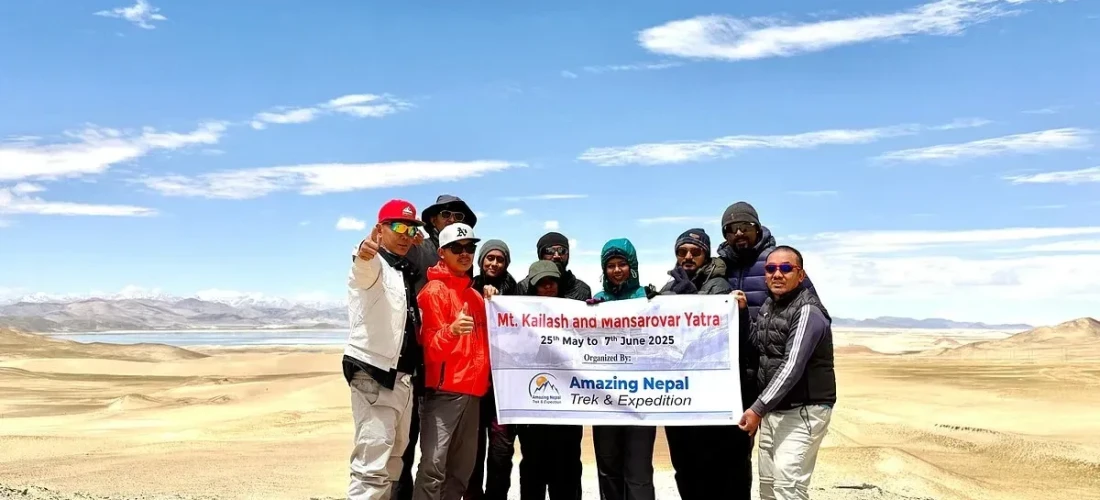
If you are planning Kailash Mansarovar in 2026, Nepal is still the most practical, most comfortable starting point for a lot of pilgrims and trekkers. Not the easiest, because nothing about Kailash is really easy. But Nepal makes the logistics smoother, the acclimatization more manageable, and the whole thing less chaotic compared to trying to stitch it together yourself at the last minute.
Also, Kathmandu has become kind of the unofficial “gateway” for Kailash. You land, you meet your group, you do paperwork, you buy last minute gear you forgot. And then, once you are properly set up, you head toward Tibet.
This guide is written to help you understand the actual routes, the documents, how long it takes, what it costs (roughly), what can go wrong, and how to plan it without losing your mind.
And yes, there are a few ways to do it. The best option depends on your age, fitness, budget, passport, and tolerance for long road days.
The big picture (what “Kailash Mansarovar from Nepal” really means)
Most travelers going “from Nepal” are doing one of these:
- Overland via Kerung (Gyirong) border
- Kathmandu to Kerung by road, then drive across Tibet to Mansarovar and Darchen, then do the Kailash Kora.
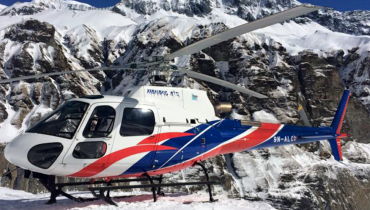
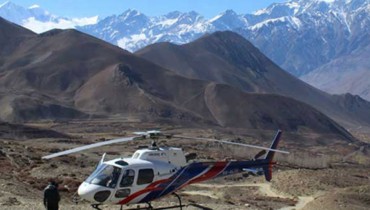
- Helicopter via Nepalgunj and Simikot (the fast and easier-on-the-body option)
- Kathmandu to Nepalgunj, fly to Simikot, helicopter to Hilsa border, then enter Tibet and drive onward.
- (Less common) Lhasa route via Nepal
- Enter Tibet, go to Lhasa first, then Shigatse, then Kailash. Longer. More sightseeing. More time.
For 2026, the first two are the main routes most people actually book.
Route 1: Overland Kailash Mansarovar via Kerung (Gyirong) border
This is the classic Nepal route. It is also the most cost effective for most groups.
How it works?(simple version)
- Arrive Kathmandu
- Prep day(s): permits, briefing, packing, sometimes Pashupatinath
- Drive Kathmandu to the Nepal China border area
- Cross into Tibet at Rasuwagadhi or the Kerung border point (your operator will guide you)
- Drive to Kerung, then onward to higher altitude towns
- Reach Lake Mansarovar, then Darchen
- Do the 3 day Kailash Kora (parikrama) via Dirapuk and Zuthulpuk
- Exit back the same way to Nepal, fly or drive home
Typical duration
Usually 13 to 16 days depending on itinerary, acclimatization days, and road conditions.
Why people pick this route?
- Generally cheaper than helicopter routes
- Better acclimatization than a sudden jump by heli
- You still get a strong pilgrimage feel because you “arrive slowly”
What’s tough about it?
- The road days can be long and bumpy
- Landslides and weather can delay you
- Border processes take time and patience, sometimes a lot of it
Who it suits?
If you are moderately fit, okay with long drives, and you want a traditional approach without the higher helicopter cost.
Route 2: Kailash Mansarovar by Helicopter via Nepalgunj, Simikot, and Hilsa
This is the route people choose when they want to reduce road time and physical strain. Not zero strain. But less.
How it works?
- Kathmandu
- Fly to Nepalgunj
- Fly to Simikot
- Helicopter to Hilsa (Nepal border area)
- Walk a short distance to cross the border, then drive into Tibet
- Continue by vehicle to Mansarovar and Darchen
- Do the Kailash Kora
- Return via Hilsa helicopter route back to Kathmandu
Typical duration
Usually 9 to 12 days.
Why people pick this route?
- Much faster overall
- Avoids the longest road approach from Kathmandu to Kerung
- Popular for older pilgrims or anyone with time limits
What’s tough about it?
- Helicopters are weather dependent
- If the weather closes in at Simikot or Hilsa, you wait
- It is more expensive
- Altitude jumps can feel sharper if acclimatization is rushed
Who it suits?
If you have limited vacation time, you can spend more for comfort, and you want the least road travel possible.
Route 3: Nepal to Lhasa to Kailash (longer scenic route)
This is more like a Tibet tour plus Kailash.
Typical duration
Often 15 to 20+ days.
Why consider it?
- Great if you want Lhasa, monasteries, and culture first
- Slower ascent can help acclimatization
Why most pilgrims skip it?
Time. Budget. And many people are focused on Kailash itself.
Documents and permits you will need in 2026 (important)
Kailash is in Tibet Autonomous Region, China. So you are dealing with Chinese and Tibetan travel rules. And these rules can change. That is why most people go with a Nepal based operator who handles the process.
In most cases you will need:
- Passport (valid at least 6 months, but honestly try for 12 months validity to be safe)
- Chinese Visa (often arranged in Kathmandu for group travel)
- Tibet Travel Permit (TTP)
- Aliens’ Travel Permit (for restricted areas)
- Military Permit (Kailash area often needs extra clearance)
Some itineraries also involve group visa formalities where your visa is issued as part of a group. This is normal for organized Kailash trips.
A note that saves headaches
Do not book random flights and hotels in Tibet yourself and assume you can “figure it out at the border”. Kailash is a restricted region. Permits matter. And the paperwork is usually tied to your guide, vehicle, and itinerary.
Best time to go (2026 season)
Most Kailash Mansarovar trips from Nepal are done in:
- May to September (main season)
- Peak months often: June, July, August (busy, but generally stable for travel)
Month by month feel (roughly)
- May: quieter, still cold at night, good for crowds
- June: popular, good weather window
- July to August: busiest, monsoon affects Nepal side more, Tibet side often okay but routes can still get delayed
- September: crisp air, fewer crowds, nights get colder again
If you are doing the helicopter route, weather windows in the Nepal Himalaya really matter. Buffer days are not “optional”. They are sanity.
How difficult is it, really?
People talk about Kailash like it is just a trek. It is not just a trek.
The main challenge is altitude, not distance.
- Darchen is around 4,500m
- The highest point of the Kora, Dolma La Pass, is around 5,630m
- Oxygen is thin. Sleep can be weird. Appetite can disappear. Small walks feel big.
The Kora difficulty
- Day 1: Darchen to Dirapuk, long day but gradual
- Day 2: Dirapuk to Zuthulpuk via Dolma La, hardest day
- Day 3: Zuthulpuk to Darchen, easier
If you have knee issues, that pass day can be rough because of the descent.
Many pilgrims also hire a horse and porter on the Kora. That is normal. Not a weakness. Just practical.
Cost overview (what you are actually paying for)
Prices vary by group size, route, hotel level, and how flights are priced that season. But in general:
- Kerung overland route: usually more budget friendly
- Helicopter via Hilsa: higher cost due to domestic flights and heli sector, plus weather buffers
Your cost typically includes:
- Kathmandu hotel and transfers (varies by package)
- Tibet side transport (vehicle, fuel, driver)
- Licensed Tibetan guide
- Permits and visa processing (as per package)
- Meals during the yatra (varies)
- Medical kit and oxygen support (better operators include this)
- Accommodation en route (basic in remote areas)
Things that often cost extra:
- International flights to Kathmandu
- Nepal visa (if applicable)
- Travel insurance with high altitude coverage
- Horse and porter during Kora
- Tips
- Personal shopping, extra snacks, hot showers in some places
Why most people book through a local Nepal operator?
Could you plan it yourself? In theory, maybe. In practice, for Kailash, it is a grind.
A good operator:
- Handles China visa and Tibet permits timing
- Coordinates vehicles and Tibetan guide
- Builds acclimatization days properly
- Has backup planning when weather blocks a heli flight
- Knows what to do when someone gets AMS symptoms
- Knows the “real” schedule, not the brochure schedule
This is where a company like Amazing Nepal Trek is relevant. They are a trusted local trekking and pilgrimage company based in Nepal, and they specialize in Kailash Mansarovar Yatra via Nepal. The difference with experienced local operators is usually not the marketing. It is the logistics. The boring stuff. Permits, hotels that actually exist, medical support, the right pacing, getting you across borders smoothly.
If you want to look them up: www.amazingnepaltrek.com
Sample itineraries (so you can visualize it)
These are not official schedules, just common structures.
Sample 14 day overland itinerary (Kerung)
- Arrive Kathmandu
- Kathmandu prep day: briefing, visa paperwork
- Drive to Syabrubesi or border region
- Cross border, drive to Kerung
- Acclimatization day in Kerung
- Drive to Saga
- Drive to Mansarovar
- Mansarovar puja, drive to Darchen
- Kora Day 1: Darchen to Dirapuk
- Kora Day 2: Dirapuk to Zuthulpuk via Dolma La
- Kora Day 3: Zuthulpuk to Darchen, drive to Saga
- Drive to Kerung
- Cross to Nepal, drive to Kathmandu
- Fly home
Sample 10 to 11 day heli itinerary (Hilsa)
- Arrive Kathmandu
- Fly to Nepalgunj
- Fly to Simikot
- Helicopter to Hilsa, cross to Tibet side, drive to Taklakot
- Acclimatization day Taklakot
- Drive to Mansarovar
- Drive to Darchen
- Kora Day 1
- Kora Day 2
- Kora Day 3, return drive
- Return via Hilsa, Simikot, Nepalgunj, Kathmandu
This route needs buffer days in real life. Weather decides a lot.
What to pack ?(light but not careless)
You do not need a mountain expedition kit. But you do need smart layering and a few unglamorous items.
Basics:
- Down jacket or heavy insulated jacket
- Thermal base layers
- Fleece or warm mid layer
- Windproof outer shell
- Warm trekking pants
- Gloves, warm hat, neck gaiter
- Good trekking shoes already broken in
- Socks, blister care (Compeed or similar)
- Sunglasses with UV protection (very important)
- Sunscreen, lip balm
- Headlamp
- Water bottle and optionally a thermos
- Small daypack
- Trekking poles (Dolma La day, you will thank yourself)
Medical and altitude:
- Personal prescriptions
- Basic meds for headache, stomach, cold
- Diamox only if advised by your doctor
- Pulse oximeter (optional but useful)
- Hydration salts
And bring snacks you actually like. At altitude, sometimes you just cannot eat heavy meals.
Health and safety notes (do not skip)
A few real points:
- Acclimatization is not a suggestion. It is the difference between finishing and turning back. Failing to acclimatize properly can lead to serious altitude illness, which you should be aware of before embarking on your journey.
- Do not hide symptoms to “protect the group”. Tell your guide early.
- Travel insurance should cover high altitude trekking and emergency evacuation. It's crucial to read the fine print to ensure you're adequately covered.
- If you have heart or lung conditions, get medical clearance first.
Reaching Kathmandu (your actual starting line)
Most international travelers:
- Fly into Tribhuvan International Airport (KTM)
- Stay 1 to 2 nights before departure for the route
Kathmandu is also where most visa and permit processing coordination happens for Kailash groups. So even if you are eager to rush, it is worth being patient here.
Choosing the right route for you (quick decision guide)
Pick Kerung overland if:
- You want a more affordable route
- You can handle long drives
- You prefer gradual altitude gain
Pick Helicopter via Hilsa if:
- You have limited time
- You want to reduce road travel
- You are okay paying more for comfort and speed
Pick Lhasa route if:
- You want a wider Tibet experience
- You have 2 to 3 weeks available
FAQ (Kailash Mansarovar from Nepal 2026)
1) Can I go to Kailash Mansarovar from Nepal in 2026 without a tour operator?
For most travelers, practically no. The Kailash region requires Tibet permits and a guide arranged through authorized channels. A Nepal based operator usually coordinates the full permit and logistics chain.
2) Which is better, Kerung overland or helicopter via Hilsa?
Kerung is more budget friendly and gradual. The helicopter option is faster and reduces road time, but costs more and is weather dependent. Ultimately, the "better" choice depends on your time, budget, and comfort needs.
3) How many days do I need for the trip?
Common ranges are 13 to 16 days for the Kerung overland route, and 9 to 12 days for the helicopter route. It's advisable to add buffer days if your schedule is tight.
4) How difficult is the Kailash Kora?
Distance wise it is manageable for many people, but altitude makes it challenging. The hardest part is crossing Dolma La Pass on day 2 of the Kora.
5) Can older pilgrims do Kailash Mansarovar from Nepal?
Yes, many do, especially via the helicopter route. With proper acclimatization and support, older pilgrims can successfully complete the journey. Fitness, medical condition, and pacing matter more than age alone.
6) What permits do I need?
Typically you will need a Chinese visa plus Tibet permits like the Tibet Travel Permit and additional restricted area permits. Your operator usually handles these as part of the package.
7) What is the best month to go?
The most popular months for this pilgrimage are May to September, with June and September often considered optimal for a great balance between weather conditions and crowd levels.
8) Do I need travel insurance?
Yes. It’s crucial to get insurance that covers high altitude trekking and emergency evacuation. Confirm the altitude limit in your policy as some insurance providers have restrictions over certain altitudes, such as those over 6000 meters.
9) How do I book a Kailash Mansarovar Yatra via Nepal with a reliable local company?
To ensure a smooth Kailash Mansarovar Yatra, it's essential to choose a Nepal-based operator that regularly conducts these trips. Such an operator should manage permits, provide experienced guides, and have medical and logistics support. Amazing Nepal Trek is one such company specializing in Kailash Mansarovar via Nepal. You can visit their website at www.amazingnepaltrek.com for more information.
10) What are the main reasons people fail to complete the Kora?
Several factors can contribute to the inability to complete the Kora. These include altitude sickness, poor acclimatization, rushing the itinerary, and sometimes experiencing knee issues on the Dolma La descent. Having a flexible plan and good guide support helps a lot in mitigating these challenges.
Also, Kathmandu has become kind of the unofficial “gateway” for Kailash. You land, you meet your group, you do paperwork, you buy last minute gear you forgot. And then, once you are properly set up, you head toward Tibet.
This guide is written to help you understand the actual routes, the documents, how long it takes, what it costs (roughly), what can go wrong, and how to plan it without losing your mind.
And yes, there are a few ways to do it. The best option depends on your age, fitness, budget, passport, and tolerance for long road days.
The big picture (what “Kailash Mansarovar from Nepal” really means)
Most travelers going “from Nepal” are doing one of these:
- Overland via Kerung (Gyirong) border
- Kathmandu to Kerung by road, then drive across Tibet to Mansarovar and Darchen, then do the Kailash Kora.
- Helicopter via Nepalgunj and Simikot (the fast and easier-on-the-body option)
- Kathmandu to Nepalgunj, fly to Simikot, helicopter to Hilsa border, then enter Tibet and drive onward.
- (Less common) Lhasa route via Nepal
- Enter Tibet, go to Lhasa first, then Shigatse, then Kailash. Longer. More sightseeing. More time.
For 2026, the first two are the main routes most people actually book.
Route 1: Overland Kailash Mansarovar via Kerung (Gyirong) border
This is the classic Nepal route. It is also the most cost effective for most groups.
How it works?(simple version)
- Arrive Kathmandu
- Prep day(s): permits, briefing, packing, sometimes Pashupatinath
- Drive Kathmandu to the Nepal China border area
- Cross into Tibet at Rasuwagadhi or the Kerung border point (your operator will guide you)
- Drive to Kerung, then onward to higher altitude towns
- Reach Lake Mansarovar, then Darchen
- Do the 3 day Kailash Kora (parikrama) via Dirapuk and Zuthulpuk
- Exit back the same way to Nepal, fly or drive home
Typical duration
Usually 13 to 16 days depending on itinerary, acclimatization days, and road conditions.
Why people pick this route?
- Generally cheaper than helicopter routes
- Better acclimatization than a sudden jump by heli
- You still get a strong pilgrimage feel because you “arrive slowly”
What’s tough about it?
- The road days can be long and bumpy
- Landslides and weather can delay you
- Border processes take time and patience, sometimes a lot of it
Who it suits?
If you are moderately fit, okay with long drives, and you want a traditional approach without the higher helicopter cost.
Route 2: Kailash Mansarovar by Helicopter via Nepalgunj, Simikot, and Hilsa
This is the route people choose when they want to reduce road time and physical strain. Not zero strain. But less.
How it works?
- Kathmandu
- Fly to Nepalgunj
- Fly to Simikot
- Helicopter to Hilsa (Nepal border area)
- Walk a short distance to cross the border, then drive into Tibet
- Continue by vehicle to Mansarovar and Darchen
- Do the Kailash Kora
- Return via Hilsa helicopter route back to Kathmandu
Typical duration
Usually 9 to 12 days.
Why people pick this route?
- Much faster overall
- Avoids the longest road approach from Kathmandu to Kerung
- Popular for older pilgrims or anyone with time limits
What’s tough about it?
- Helicopters are weather dependent
- If the weather closes in at Simikot or Hilsa, you wait
- It is more expensive
- Altitude jumps can feel sharper if acclimatization is rushed
Who it suits?
If you have limited vacation time, you can spend more for comfort, and you want the least road travel possible.
Route 3: Nepal to Lhasa to Kailash (longer scenic route)
This is more like a Tibet tour plus Kailash.
Typical duration
Often 15 to 20+ days.
Why consider it?
- Great if you want Lhasa, monasteries, and culture first
- Slower ascent can help acclimatization
Why most pilgrims skip it?
Time. Budget. And many people are focused on Kailash itself.
Documents and permits you will need in 2026 (important)
Kailash is in Tibet Autonomous Region, China. So you are dealing with Chinese and Tibetan travel rules. And these rules can change. That is why most people go with a Nepal based operator who handles the process.
In most cases you will need:
- Passport (valid at least 6 months, but honestly try for 12 months validity to be safe)
- Chinese Visa (often arranged in Kathmandu for group travel)
- Tibet Travel Permit (TTP)
- Aliens’ Travel Permit (for restricted areas)
- Military Permit (Kailash area often needs extra clearance)
Some itineraries also involve group visa formalities where your visa is issued as part of a group. This is normal for organized Kailash trips.
A note that saves headaches
Do not book random flights and hotels in Tibet yourself and assume you can “figure it out at the border”. Kailash is a restricted region. Permits matter. And the paperwork is usually tied to your guide, vehicle, and itinerary.
Best time to go (2026 season)
Most Kailash Mansarovar trips from Nepal are done in:
- May to September (main season)
- Peak months often: June, July, August (busy, but generally stable for travel)
Month by month feel (roughly)
- May: quieter, still cold at night, good for crowds
- June: popular, good weather window
- July to August: busiest, monsoon affects Nepal side more, Tibet side often okay but routes can still get delayed
- September: crisp air, fewer crowds, nights get colder again
If you are doing the helicopter route, weather windows in the Nepal Himalaya really matter. Buffer days are not “optional”. They are sanity.
How difficult is it, really?
People talk about Kailash like it is just a trek. It is not just a trek.
The main challenge is altitude, not distance.
- Darchen is around 4,500m
- The highest point of the Kora, Dolma La Pass, is around 5,630m
- Oxygen is thin. Sleep can be weird. Appetite can disappear. Small walks feel big.
The Kora difficulty
- Day 1: Darchen to Dirapuk, long day but gradual
- Day 2: Dirapuk to Zuthulpuk via Dolma La, hardest day
- Day 3: Zuthulpuk to Darchen, easier
If you have knee issues, that pass day can be rough because of the descent.
Many pilgrims also hire a horse and porter on the Kora. That is normal. Not a weakness. Just practical.
Cost overview (what you are actually paying for)
Prices vary by group size, route, hotel level, and how flights are priced that season. But in general:
- Kerung overland route: usually more budget friendly
- Helicopter via Hilsa: higher cost due to domestic flights and heli sector, plus weather buffers
Your cost typically includes:
- Kathmandu hotel and transfers (varies by package)
- Tibet side transport (vehicle, fuel, driver)
- Licensed Tibetan guide
- Permits and visa processing (as per package)
- Meals during the yatra (varies)
- Medical kit and oxygen support (better operators include this)
- Accommodation en route (basic in remote areas)
Things that often cost extra:
- International flights to Kathmandu
- Nepal visa (if applicable)
- Travel insurance with high altitude coverage
- Horse and porter during Kora
- Tips
- Personal shopping, extra snacks, hot showers in some places
Why most people book through a local Nepal operator?
Could you plan it yourself? In theory, maybe. In practice, for Kailash, it is a grind.
A good operator:
- Handles China visa and Tibet permits timing
- Coordinates vehicles and Tibetan guide
- Builds acclimatization days properly
- Has backup planning when weather blocks a heli flight
- Knows what to do when someone gets AMS symptoms
- Knows the “real” schedule, not the brochure schedule
This is where a company like Amazing Nepal Trek is relevant. They are a trusted local trekking and pilgrimage company based in Nepal, and they specialize in Kailash Mansarovar Yatra via Nepal. The difference with experienced local operators is usually not the marketing. It is the logistics. The boring stuff. Permits, hotels that actually exist, medical support, the right pacing, getting you across borders smoothly.
If you want to look them up: www.amazingnepaltrek.com
Sample itineraries (so you can visualize it)
These are not official schedules, just common structures.
Sample 14 day overland itinerary (Kerung)
- Arrive Kathmandu
- Kathmandu prep day: briefing, visa paperwork
- Drive to Syabrubesi or border region
- Cross border, drive to Kerung
- Acclimatization day in Kerung
- Drive to Saga
- Drive to Mansarovar
- Mansarovar puja, drive to Darchen
- Kora Day 1: Darchen to Dirapuk
- Kora Day 2: Dirapuk to Zuthulpuk via Dolma La
- Kora Day 3: Zuthulpuk to Darchen, drive to Saga
- Drive to Kerung
- Cross to Nepal, drive to Kathmandu
- Fly home
Sample 10 to 11 day heli itinerary (Hilsa)
- Arrive Kathmandu
- Fly to Nepalgunj
- Fly to Simikot
- Helicopter to Hilsa, cross to Tibet side, drive to Taklakot
- Acclimatization day Taklakot
- Drive to Mansarovar
- Drive to Darchen
- Kora Day 1
- Kora Day 2
- Kora Day 3, return drive
- Return via Hilsa, Simikot, Nepalgunj, Kathmandu
This route needs buffer days in real life. Weather decides a lot.
What to pack ?(light but not careless)
You do not need a mountain expedition kit. But you do need smart layering and a few unglamorous items.
Basics:
- Down jacket or heavy insulated jacket
- Thermal base layers
- Fleece or warm mid layer
- Windproof outer shell
- Warm trekking pants
- Gloves, warm hat, neck gaiter
- Good trekking shoes already broken in
- Socks, blister care (Compeed or similar)
- Sunglasses with UV protection (very important)
- Sunscreen, lip balm
- Headlamp
- Water bottle and optionally a thermos
- Small daypack
- Trekking poles (Dolma La day, you will thank yourself)
Medical and altitude:
- Personal prescriptions
- Basic meds for headache, stomach, cold
- Diamox only if advised by your doctor
- Pulse oximeter (optional but useful)
- Hydration salts
And bring snacks you actually like. At altitude, sometimes you just cannot eat heavy meals.
Health and safety notes (do not skip)
A few real points:
- Acclimatization is not a suggestion. It is the difference between finishing and turning back. Failing to acclimatize properly can lead to serious altitude illness, which you should be aware of before embarking on your journey.
- Do not hide symptoms to “protect the group”. Tell your guide early.
- Travel insurance should cover high altitude trekking and emergency evacuation. It's crucial to read the fine print to ensure you're adequately covered.
- If you have heart or lung conditions, get medical clearance first.
Reaching Kathmandu (your actual starting line)
Most international travelers:
- Fly into Tribhuvan International Airport (KTM)
- Stay 1 to 2 nights before departure for the route
Kathmandu is also where most visa and permit processing coordination happens for Kailash groups. So even if you are eager to rush, it is worth being patient here.
Choosing the right route for you (quick decision guide)
Pick Kerung overland if:
- You want a more affordable route
- You can handle long drives
- You prefer gradual altitude gain
Pick Helicopter via Hilsa if:
- You have limited time
- You want to reduce road travel
- You are okay paying more for comfort and speed
Pick Lhasa route if:
- You want a wider Tibet experience
- You have 2 to 3 weeks available
FAQ (Kailash Mansarovar from Nepal 2026)
1) Can I go to Kailash Mansarovar from Nepal in 2026 without a tour operator?
For most travelers, practically no. The Kailash region requires Tibet permits and a guide arranged through authorized channels. A Nepal based operator usually coordinates the full permit and logistics chain.
2) Which is better, Kerung overland or helicopter via Hilsa?
Kerung is more budget friendly and gradual. The helicopter option is faster and reduces road time, but costs more and is weather dependent. Ultimately, the "better" choice depends on your time, budget, and comfort needs.
3) How many days do I need for the trip?
Common ranges are 13 to 16 days for the Kerung overland route, and 9 to 12 days for the helicopter route. It's advisable to add buffer days if your schedule is tight.
4) How difficult is the Kailash Kora?
Distance wise it is manageable for many people, but altitude makes it challenging. The hardest part is crossing Dolma La Pass on day 2 of the Kora.
5) Can older pilgrims do Kailash Mansarovar from Nepal?
Yes, many do, especially via the helicopter route. With proper acclimatization and support, older pilgrims can successfully complete the journey. Fitness, medical condition, and pacing matter more than age alone.
6) What permits do I need?
Typically you will need a Chinese visa plus Tibet permits like the Tibet Travel Permit and additional restricted area permits. Your operator usually handles these as part of the package.
7) What is the best month to go?
The most popular months for this pilgrimage are May to September, with June and September often considered optimal for a great balance between weather conditions and crowd levels.
8) Do I need travel insurance?
Yes. It’s crucial to get insurance that covers high altitude trekking and emergency evacuation. Confirm the altitude limit in your policy as some insurance providers have restrictions over certain altitudes, such as those over 6000 meters.
9) How do I book a Kailash Mansarovar Yatra via Nepal with a reliable local company?
To ensure a smooth Kailash Mansarovar Yatra, it's essential to choose a Nepal-based operator that regularly conducts these trips. Such an operator should manage permits, provide experienced guides, and have medical and logistics support. Amazing Nepal Trek is one such company specializing in Kailash Mansarovar via Nepal. You can visit their website at www.amazingnepaltrek.com for more information.
10) What are the main reasons people fail to complete the Kora?
Several factors can contribute to the inability to complete the Kora. These include altitude sickness, poor acclimatization, rushing the itinerary, and sometimes experiencing knee issues on the Dolma La descent. Having a flexible plan and good guide support helps a lot in mitigating these challenges.


 (1) (1).jpg)