Kathmandu is one of those places that people accidentally underrate.
They land, they get a taxi, they buy a sleeping bag, they eat one plate of momo, and then they’re off to the mountains like the city is just some noisy waiting room.
But if you give it even a little attention, Kathmandu becomes part of the trek. Not the hiking part, obviously. More like the warm up and the cool down. The place where you ease into Nepal, and later, the place where you come back to yourself after days of trail life.
Here’s what I’d do. Before and after. With some practical stuff in between, because you actually need that too.
Before the trek: ease in, prep properly, and don’t rush it
1. Give yourself a buffer day. Seriously.
If you can, arrive at least one full day before you’re meant to leave for the trail.
Kathmandu isn’t just “busy”. It’s unpredictable in small ways. Traffic. Weather. Flight delays. Gear that looks fine online but feels weird in person. That one pharmacy item you forgot. A last minute permit detail. All of that is easier when you have time.
Also, your body will thank you. Jet lag plus an early road transfer to the mountains is a rough start.
2. Walk through Thamel, but don’t let it eat your whole day
Thamel is where a lot of trekkers base themselves, and yeah, it’s chaotic. It’s also useful.
Do a loop. Get your bearings. Note where the ATMs are. Find a café you like. Locate a couple of gear shops. Then leave and go see Kathmandu as a real place.
If you’re staying in Thamel, it’s still worth stepping out early in the morning. Streets feel calmer, shopkeepers are setting up, and you get a more human version of the neighborhood before the honking ramps up.
3. Do the important trek admin while your brain is fresh
Before the temples, before the souvenirs, before you “just sit for a second” and lose two hours.
Handle the basics:
Confirm your trek details: meeting time, pickup point, what’s included, what you need to carry
Permits and documents: your company usually helps, but check what you’re responsible for
Insurance copies: have a digital version and a screenshot, not just an email
Cash plan: how much you’ll need on the trail depends on the route, but having clean bills helps
Local SIM: set it up before you’re tired and impatient
If you’re trekking with a local operator, they typically streamline this. And that’s the point. Less friction, more excitement.
If you’re still deciding, Amazing Nepal Trek is a strong option. They’re a reliable local company guiding treks across Everest, Annapurna, Langtang, Manaslu, and other regions, with the kind of on the ground knowledge you actually want in Nepal. You can browse routes and plan directly here Amazing Nepal Trek.
4. Last minute gear shopping (without getting scammed or stressed)
Kathmandu is great for gear shopping, with one big asterisk: quality varies wildly.
You can buy or rent almost anything. Down jackets, trekking poles, duffel bags, base layers, headlamps. Some will be branded originals, some will be “Kathmandu originals”. Sometimes you don’t care. Sometimes you really should.
A few practical rules:
Rent big items if you’re not going to use them again (sleeping bag, down jacket)
Don’t gamble on boots at the last minute unless you know exactly what you’re doing
Check zippers and seams like your trip depends on it, because it kind of does
Try everything on with the layers you’ll wear on the trail
Buy your toiletries and basics in Kathmandu because choice is better and prices are steadier
And honestly, don’t get obsessive. You don’t need a perfect kit. You need a comfortable kit that works.
5. Eat a “real” Nepali meal before you live on dal bhat (and then eat dal bhat anyway)
You’re going to eat dal bhat on trek. It’s filling, it’s delicious, and it’s basically trekking fuel.
But in Kathmandu you can try a wider spread:
Momo (dumplings, steamed or fried)
Newari food (more on this in a second)
Thukpa (noodle soup, great if it’s chilly)
Sel roti if you spot it
Chatamari (often called “Newari pizza”, but it’s its own thing)
If you want one specific food mission in Kathmandu, make it this: try a proper Newari meal. Kathmandu Valley is the heartland of Newar culture, and the food has personality. Spices, textures, little plates, things you can’t quite name at first. Worth it.
6. Do one big cultural hit: Kathmandu Durbar Square
If you only do one heritage site before your trek, this is an easy choice.
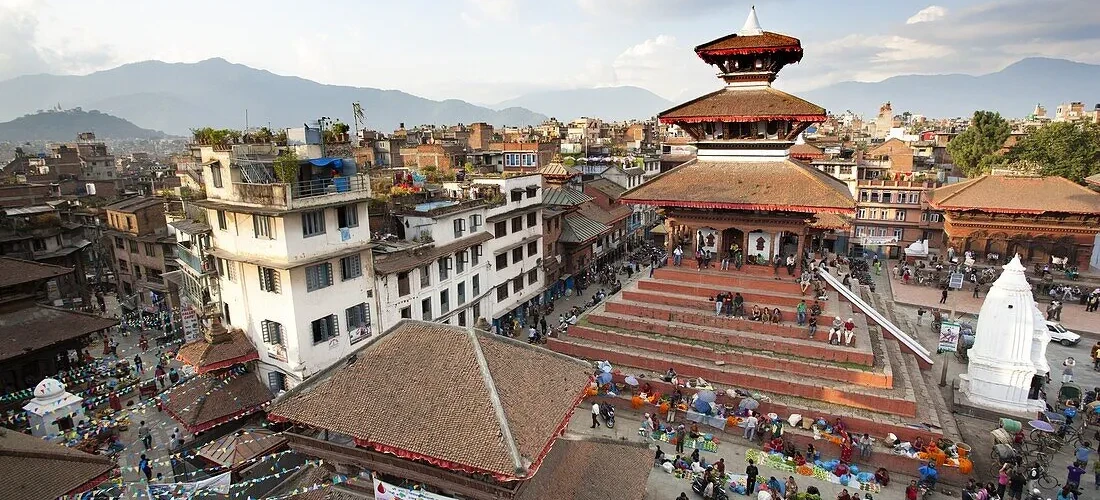
Kathmandu Durbar Square is not a quiet museum. It’s a living zone of temples, courtyards, carvings, and small daily rituals happening around you. You’ll see the layers. Old woodwork, stone statues, local people moving through like it’s normal because it is.
Go in the morning if you can. Better light, fewer crowds, and you’re not competing with midday heat and traffic noise.
7. Swayambhunath (Monkey Temple) for the mood shift
Swayambhunath feels like Kathmandu taking a deep breath.
It’s up on a hill. You climb the steps, pass prayer wheels, smell incense, maybe get lightly judged by a monkey. And then you get this wide view of the valley. The city becomes a textured sprawl instead of a loud tangle.
It’s also a nice way to mentally transition into the spiritual and mountain side of Nepal. Even if you’re not religious, the place works on you a little.
8. Pashupatinath if you’re open to something intense and real
Pashupatinath is one of the most sacred Hindu temples in Nepal, set along the Bagmati River.
This is not a “pretty photo” stop, at least not only. You may see cremation ceremonies. You’ll definitely feel the weight of the place. Life, death, family, devotion, everything right there in the open.
Be respectful. Dress modestly. Don’t take intrusive photos. If you’re unsure, just observe quietly. It can be one of the most memorable places in Kathmandu, but it asks for maturity.
9. Boudhanath for calm, circles, and butter tea breaks
Boudha is a different vibe entirely.
The stupa is enormous. You walk around it clockwise with everyone else, passing monks, locals, candle offerings, small shops. It has a soothing rhythm. And the area is full of rooftop cafés where you can sit and stare at the stupa like you have nowhere else to be.
If you’re anxious about your trek, go to Boudhanath. It’s hard to stay frantic while walking those slow circles.
During the trek: one quick note that makes Kathmandu better later
Keep a tiny list in your phone of what you want when you get back.
Not big philosophical stuff. Simple things.
“Hot shower with pressure.”
“Coffee that isn’t instant.”
“Clean socks.”
“Massage.”
“Cake.”
“Sit still and not listen for yaks.”
Because post trek Kathmandu is way more satisfying when you already know what you’re craving.
After the trek: recover first, then explore like a human again
You’ll come back dusty. Possibly sunburned. Probably proud. Maybe a little weirdly emotional, in that quiet way treks do to people.
Don’t try to “maximize sightseeing” on day one back. Your body and brain need a reset.
1. Take the best shower of your life, then do nothing for a bit
Book a place with reliable hot water if you can. This is not the time to be brave.
Then do the simple recovery triad:
shower
laundry
long meal
If you want to go one step further, grab electrolytes and fruit. Kathmandu has plenty of little shops for that, and your body will absorb it like dry soil.
2. Get a proper massage or spa treatment
After days of walking downhill, your quads and calves may feel like someone swapped them out for rocks.
Kathmandu has loads of massage places, from budget to boutique. A few tips:
Ask for a firm but not brutal massage. Pain is not automatically effectiveness.
Tell them you just finished a trek and where you’re sore.
If you’re sensitive, start with foot and back, then go full body later.
A good massage after a trek is not a luxury. It’s maintenance. You’ll sleep better too.
3. Eat something that’s not trekking food
Dal bhat is amazing. But after a trek, variety feels like a celebration.
Go for:
a big breakfast with eggs, fruit, good coffee
sushi or ramen around Thamel or Lazimpat
Newari again, if you didn’t do it pre trek
pastries, because why not
Also, let yourself eat slowly. On trek you eat because you’re hungry and tired. In Kathmandu you can eat because it tastes good.
4. Café hop like you’re recovering from being heroic
Kathmandu has a surprisingly strong café scene. Especially around Thamel, Jhamsikhel, and Lazimpat.
This is a perfect post trek activity because it’s low effort. You can journal, upload photos, message family, stare into space. And you can do it without feeling like you’re wasting time, because you’re not. This is part of the trip.
5. Do Patan Durbar Square on a slow afternoon
Patan (Lalitpur) is close to central Kathmandu, and it’s a beautiful way to re enter history without the noise level of some other areas.
The square is full of detailed temples, traditional courtyards, and that calm golden light later in the day. It’s also a good place to shop for higher quality crafts if you want something meaningful to take home.
Take your time here. Sit on the steps. Watch life happen.
6. Bhaktapur if you have an extra day and want a time shift
Bhaktapur feels like a different world. More open space, more preserved architecture, fewer vehicles in certain sections, and a strong sense of old city layout.
Go for:
the squares and temples
pottery areas
juju dhau (the famous “king curd”, basically local yogurt and it’s excellent)
It’s an easy day trip, and after a trek it feels gentle. Like wandering instead of conquering.
7. Buy souvenirs after the trek, not before
Before a trek, you don’t want extra stuff. After a trek, you know what mattered.
Maybe it’s a prayer flag. A small thangka painting. Handmade paper. A kukri. A wool hat you actually wore. Or just a bag of Nepali tea.
Shopping after the trek also hits differently because you’re in that reflective mood. You’re more patient. Less frantic. You’ll choose better.
8. Do the spiritual sites you skipped, but with less hurry
If you didn’t make it to Boudhanath, Swayambhunath, or Pashupatinath before the trek, do them after. Or do them again.
They change when you come back from the mountains. Your attention is sharper. Small things land more. The sound of bells, the smoke, the quiet faces.
It’s interesting, actually. Kathmandu can feel overwhelming when you first arrive. After trekking, you often feel more spacious inside, so the city feels less like an assault and more like a living organism.
9. Have one “closing” meal with your trek crew
If you trekked with a guide or a porter, or met people along the way, try to do one final dinner together.
It doesn’t need to be fancy. Just a proper sit down meal where you can re tell the funny parts, the hard parts, the unexpectedly emotional parts. Kathmandu is good for that kind of ending. It gives the trek a clean finish.
And if you booked through a local company, this is also the moment where you realize what you paid for beyond logistics. Local context. Problem solving. Care. The behind the scenes stuff you never see.
If you want that kind of experience across Nepal’s big trekking regions, Amazing Nepal Trek is worth checking out for Everest, Annapurna, Langtang, Manaslu, and more:
A simple Kathmandu game plan (so you don’t overthink it)
If you want a clean, realistic flow, here’s one:
Before the trek (1 to 2 days)
Day 1: arrive, Thamel loop, trek admin, early night
Day 2: Durbar Square + Boudhanath or Swayambhunath, gear check, good dinner
After the trek (2 to 4 days)
Day 1 back: shower, laundry, massage, long meal, sleep
Day 2: Patan Durbar Square + café time
Day 3: Bhaktapur day trip (optional but great)
Day 4: shopping, last stupa walk, slow goodbye
You can compress it, sure. But Kathmandu rewards the slower version.
Final thoughts
Kathmandu is not just where treks begin. It’s where your trek becomes a story you can actually hold.
Before the mountains, Kathmandu helps you settle in. Learn the rhythm. Get what you need. Touch the culture, even briefly, so Nepal isn’t just peaks in the distance.
After the mountains, it gives you softness. Coffee, hot water, temples, history, good food, and time to process what you just did out there.
So don’t treat it like a layover.
Treat it like the first and last chapter of the same adventure.
FAQs (Frequently Asked Questions)
Why should I give myself a buffer day before starting my trek in Kathmandu?
Arriving at least one full day before your trek allows you to handle unpredictable factors like traffic, weather, flight delays, last-minute gear issues, permit details, and helps your body adjust to jet lag. This buffer day ensures a smoother start to your trekking adventure.
What is the best way to explore Thamel without getting overwhelmed?
Take a loop through Thamel to get your bearings: locate ATMs, find a café you like, and note gear shops. Then step out to experience Kathmandu beyond Thamel. Early mornings are quieter and offer a more authentic feel before the neighborhood gets busy.
What important trek preparations should I complete while I'm still fresh in Kathmandu?
Before sightseeing or shopping, confirm your trek details (meeting time, pickup point), check permits and documents with your operator, have digital and screenshot copies of insurance, plan your cash needs with clean bills, and set up a local SIM card to stay connected.
How can I shop for trekking gear in Kathmandu without getting scammed or stressed?
Kathmandu offers diverse gear options but quality varies. Rent big items like sleeping bags if you won't reuse them. Avoid last-minute boot purchases unless experienced. Always check zippers and seams carefully and try on gear with layers you'll wear on the trail. Buy toiletries locally for better choice and prices.
What local foods should I try in Kathmandu before my trek?
Try authentic Nepali dishes such as momo (dumplings), Newari food (rich in spices and textures), thukpa (noodle soup), sel roti (traditional sweet bread), and chatamari (Newari rice crepe). A proper Newari meal is highly recommended for its unique flavors before living on dal bhat during the trek.
Which cultural sites are must-visits in Kathmandu before trekking?
Kathmandu Durbar Square is a top heritage site offering temples, courtyards, carvings, and daily rituals—best visited in the morning for light and fewer crowds. Also visit Swayambhunath (Monkey Temple) on a hilltop for a peaceful mood shift and panoramic views of the city.

 (1) (1).jpg)