There’s a specific kind of cold that settles into your bones when you’re waiting for a view in the mountains.
Not the dramatic, wind slapping your face cold. I mean the
quiet one. The one that shows up after you’ve walked all day, eaten your dal
bhat, crawled into a sleeping bag, and then realized you can’t sleep because
you keep thinking, what if tomorrow is fog again.
That was Annapurna Base Camp for us at first.
We’d come for the big stuff. That famous bowl of mountains.
The feeling of standing at 4,130 meters and looking up at Annapurna I and
Machapuchare like you’re looking into a painted wall.
But the Himalayas do not care what you came for.
They were doing their own thing. Clouds, mist, small snow
flurries that appeared and vanished like someone shaking out a blanket. Days
where the trail felt like it was leading into a gray tunnel and the only way
you knew you were gaining altitude was the way your lungs started negotiating
with you on every uphill.
Still, you keep walking. Because what else do you do.
The trail taught me patience. Again.
The early days were almost too friendly.
Terraced fields. Warm sun. Little stone steps that looked
like they’d been there forever. We moved through villages where dogs slept in
the middle of the path like they owned it. Kids would shout “Namaste!” with
that bright, half shy confidence. There were little tea houses with orange
Fanta and posters for Everest in places that felt like the edge of nowhere.
And then, slowly, the landscape began shifting into
something more serious.
The forest got thicker. The air got cooler. The river noise
turned louder, more constant, like a companion you couldn’t shake. Some
sections were all stairs. Endless stairs. You stop counting because counting
makes it worse.
We kept hearing people say, “ABC is not technical, but it’s
relentless.” That’s accurate. It doesn’t try to scare you with cliffs. It just
grinds you down with repetition. Up, up, up. Then a small flat section that
tricks you into relaxing. Then up again.
And the whole time, the weather kept teasing us.
We’d catch a slice of blue sky for ten minutes, then it
would close again. The mountains would show a shoulder, then vanish. Like a shy
animal in the trees.
At night in the tea houses, we’d sit around the stove and
pretend we weren’t checking weather apps that barely worked. Someone would say
they heard tomorrow morning might be clear. Another person would shrug and say,
“Nepal weather is a mood.”
That became a running joke. A mood.
The people. The real heartbeat.
Here’s the part nobody really prepares you for.
Yes, the trek is about the mountains. But you end up
remembering the people with the same intensity.
The lodge owners who wake up before dawn to make tea. The
women carrying baskets of supplies uphill like gravity is optional. The porters
moving fast, steady, sandals sometimes, carrying loads that look impossible and
still smiling at you like you’re the one doing something impressive.
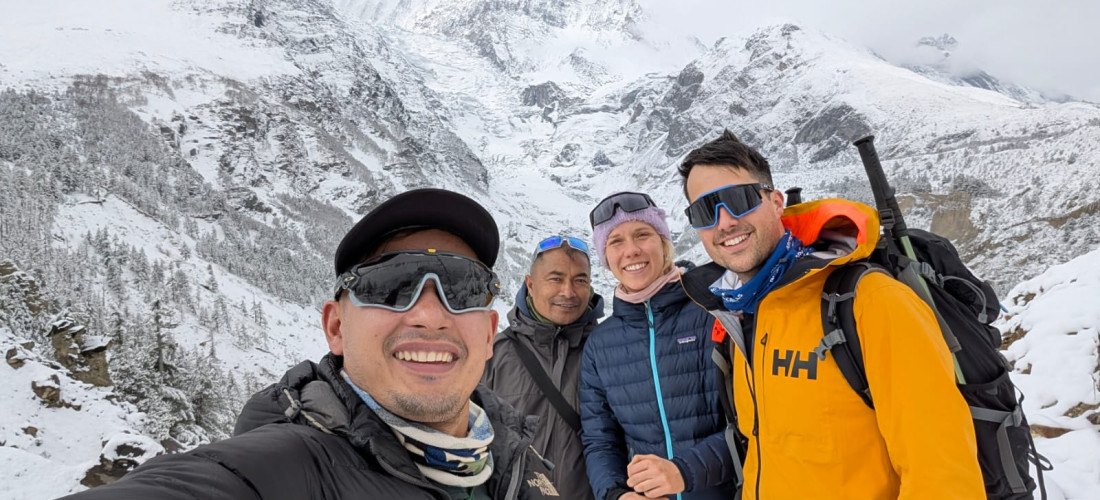
Our guide, from Amazing Nepal Trek, had this calm presence
that kept the whole group steady. Not overly cheerful. Not performing. Just…
grounded.
He’d point out little things. A shrine tucked into a rock
wall. A cluster of wildflowers that somehow survived in the cold. The way the
clouds moved across Machapuchare and why locals call it sacred and untouched.
Sometimes he’d tell stories. Not long speeches. Just small,
well placed details while we walked. About the Gurung villages. About the old
trail routes. About how the region changes after monsoon and how certain
sections of the path get rebuilt every year because the mountains, again, do
not care.
It mattered. Because when you’re tired, you need more than
scenery. You need context. You need a reason to keep moving other than “it’s on
the itinerary.”
Amazing Nepal Trek also handled the logistics in a way that
made everything feel… simpler. Permits. Timing. Tea house planning. The pacing.
Especially the pacing.
I’ve done trips where the plan is basically “walk fast,
reach destination, collapse.” This was different. There was proper
acclimatization built into the rhythm. Not a rigid “rest day” situation
necessarily, but the days were designed with enough realism that we weren’t
constantly arriving late and depleted.
It’s funny how “comfort” in the mountains becomes something
very basic. A warm meal that shows up on time. A room that isn’t a chaotic
scramble. Someone checking if you’re drinking enough water, even when you’re
bored of water.
Those things stack up.
The Annapurna Sanctuary has its own atmosphere. Even before you reach base
camp, you feel it.
The trees thin out. The path opens. The valley widens and
then narrows in a different way, like you’re being guided into a bowl. There’s
a point where you realize you’re surrounded and you don’t know when it
happened.
The air changes too. Thinner, yes. But also sharper.
Cleaner. Like the oxygen you do get is more honest.
By the time we reached the higher settlements, the weather
became the main character.
One afternoon we arrived at a tea house and the whole place
felt wrapped in cloud. Visibility was maybe fifty meters. People were still
laughing, playing cards, eating garlic soup, but there was this quiet tension
underneath. Everyone was here for the view, and nobody wanted to say it out
loud.
That night was rough.
Not dramatic altitude sickness rough, thankfully. Just that
annoying mix of light headache, dry throat, and restless sleep because you keep
waking up to pee. You check your phone, no signal. You listen to the wind, then
realize it’s not wind, it’s just the river far below.
At some point I woke up and the room felt strangely still.
No rain tapping. No gusts. Nothing.
I remember thinking, either it’s about to snow hard, or…
maybe.
Base camp. But still no mountains.
We started early.
Headlamps. Crunchy ground. Breath showing up in front of our
faces. That sleepy silence where everybody is moving but nobody is talking.
The trail to Annapurna Base Camp from the last stop isn’t
long, but at that altitude, “not long” is relative. You walk slow. You try not
to look too far ahead because it makes the distance feel bigger. You just
follow the little chain of lights in front of you.
When we arrived at Annapurna Base Camp, it was still cloudy.
Not fully whiteout, but enough to hide the peaks. You could
sense mass around you, like the mountains were standing right there, but the
curtain wasn’t lifting yet.
That moment was honestly crushing.
Not because the trek wasn’t worth it. It was. But because
you’re human and you want the payoff, and you want it now. You want to take
that photo that proves you were here. You want to sit with tea in your hands
and stare at Annapurna I like every blog post tells you to.
Instead, we sat on a bench in puffy jackets and stared into
gray.
People still smiled for pictures with the ABC sign, because
that’s what you do. Someone joked, “The sign is the mountain today.”
We waited.
And waited.
You start noticing little things. How quiet it is even with
other trekkers around. How the prayer flags barely moved. How the cold feels
different when you’re not walking.
Our guide didn’t force optimism. That was the best part. He
just said, “We wait a bit. Weather can change fast here.”
He’d seen it before. You could tell.
When the sky cleared
It didn’t happen like a movie. No sudden dramatic beam of
sunlight and choir music.
It was slower.
First, a small rip opened in the cloud on the right side.
Just a thin slice. Like someone pulling back a curtain by a few inches.
Then you see a ridge line. Dark against pale sky. You blink
because you’re not sure it’s real.
Then, behind it, something bigger. White, huge, solid. A
face of ice and rock so massive your brain takes a second to understand the
scale.
Annapurna South appeared first for us, like it was stepping
forward to introduce itself. Then Hiunchuli. Then, gradually, the whole ring
started revealing itself.
And then Annapurna I.
It doesn’t look like a mountain you climb. It looks like a
wall you pray to.
There’s this strange feeling that hits when the mountains
finally show themselves. Relief, sure. But also something heavier. Like you’ve
been invited into a room you don’t belong in.
Everyone around us got quiet in the same way. Cameras came
out, but even the camera clicks felt subdued. People stopped talking mid
sentence. Someone whispered “wow” like they were in a temple.
I remember looking up and laughing once, just a small
breathy laugh, because it felt absurd that something that big could exist and I
could just be standing there looking at it, holding a cup of instant coffee.
The sky kept clearing, more and more blue leaking through.
The clouds lifted higher and then broke apart completely, leaving the sanctuary
open and bright.
The snow lines were crisp. The shadows on the ridges made
everything look carved. The glaciers looked like frozen rivers paused mid flow.
And Machapuchare, back behind us, showed its fishtail shape
in this clean, perfect way that almost looked fake. Like someone drew it with
intention.
That was the moment.
Not the arrival at base camp. Not the sign. Not the altitude
number.
The moment the sky cleared and the mountains decided to let
us see.
The weird aftertaste of awe
You’d think that after something like that you’d feel
satisfied and done. But it’s not quite like that.
Awe has an aftertaste.
Part of you feels full, like you’ve been fed something real.
But another part feels unsettled because you realize how small you are. How
temporary. How everything you worry about at home is, at least for a few
minutes, completely irrelevant.
We stayed out there longer than we planned. Just standing.
Shifting from foot to foot because it was cold. Taking photos, yes, but also
putting the phones away again because the view was doing something to us that a
screen couldn’t hold.
Our guide pointed out details. Which peaks were which. Where
the avalanches sometimes come down. How quickly the weather can slam shut
again, even on a morning like this.
He was right. The clouds started creeping back later.
Not all at once, but you could see them gathering like a
slow decision.
So we walked back toward the lodge, and I kept turning
around like I was afraid the mountains would disappear permanently the moment I
stopped looking.
Why a local company mattered on days like this?
I’m not saying you can’t do ABC in other ways. People do.
But for me, having a local company, and specifically Amazing Nepal Trek,
changed how the whole trek felt.
It wasn’t just about a guide leading the way. It was the way
the trip had local intelligence baked into it.
Small examples.
When to start walking to avoid afternoon cloud build up.
Where to stop for lunch so you’re not stuck hungry in a crowded place. Which
tea houses tend to be warmer, or less windy, or simply better managed. How to
adjust pace when someone is feeling off without turning it into a dramatic
group problem.
And then the bigger stuff too.
Their guides felt connected to the region, not like
temporary staff placed on a trail. They’d greet lodge owners by name. They’d
check on porters in a way that felt real. There was a sense that the trek
wasn’t just a product. It was part of a living network of people who actually
depend on these mountains.
Also, and this matters, the cost you pay with a local
company tends to support local communities more directly. The guides, porters,
the small businesses on the route. You see it with your own eyes. You’re eating
in their kitchens, sleeping under their roofs, relying on their systems.
Amazing Nepal Trek also had flexibility. That’s huge on a
route like this, where weather and bodies make their own plans. If you want a
shorter ABC trek, or a slower one, or something with a bit more comfort, they
can shape it. It’s not one rigid template.
Basically, you feel looked after, but not babysat. There’s a
difference.
Leaving base camp
The descent was easier on the lungs, harder on the knees.
And mentally, it was strange. You spend days walking toward
a single point, and then you turn around and walk away from it. The goal
becomes something behind you.
But I kept thinking about that clearing.
How close we came to missing it. How easily we could have
arrived an hour later and seen nothing but cloud. How the mountains don’t
perform on schedule. They don’t care about your flights or your plans or your
expectations.
And yet, they gave us that morning.
Back down in the lower villages, the air thickened again.
The trees returned. The river felt louder. The world got busier. People asked
where we’d been, and we said “ABC,” and it sounded almost casual, like it was
just a place on a map.
But in my head I kept seeing it.
That ring of peaks, sharp and white against blue. That
moment where the sanctuary opened up, and it felt like the earth was reminding
us what it’s capable of.
The thing I’ll remember
If you asked me what I’ll remember most from the Annapurna
Base Camp trek, I could say the obvious.
The altitude. The stone steps. The tea houses. The garlic
soup. The prayer flags snapping in the wind.
But honestly?
I’ll remember sitting in cold air, waiting, not knowing if
we’d get anything. Then watching the sky slowly clear, like someone peeling
back layers of a secret.
And I’ll remember how it felt to be there with people who
knew the trail, knew the rhythm, knew when to push and when to pause. That’s
what Amazing Nepal Trek gave us. A steadier path through an unpredictable
place.
Because sometimes the best moment of the whole trek is not
something you can control.
It’s something you earn by showing up anyway.
By walking into the gray.
And staying long enough for the mountains to finally say,
alright. Look.
FAQs (Frequently Asked Questions)
What kind of cold can you expect while waiting for a view in the Annapurna
Base Camp trek?
You can expect a specific kind of cold that settles into
your bones — not the dramatic, wind-slapping cold, but a quiet chill that
arrives after a long day of walking and settling into your sleeping bag,
especially when you're worried about fog obscuring the mountain views the next
day.
How does the Annapurna Base Camp trail challenge trekkers despite not being
technically difficult?
The trail is described as relentless rather than technical.
It grinds you down with repetition: continuous uphill climbs interspersed with
brief flat sections that trick you into relaxing before climbing again. The
weather also teases trekkers with fleeting glimpses of blue sky and mountain
views that vanish quickly.
What role do local people and guides play during the Annapurna Base Camp
trek?
Local people are the real heartbeat of the trek. Lodge
owners, women carrying supplies uphill, porters, and guides provide essential
support and companionship. Guides offer calm presence, share stories about
Gurung villages, old trail routes, and local culture, which gives context to
the journey beyond just scenery.
How does Amazing Nepal Trek enhance the trekking experience at Annapurna
Base Camp?
Amazing Nepal Trek manages logistics like permits, timing,
tea house planning, and pacing thoughtfully. Their approach includes proper
acclimatization built into the rhythm of the trek, ensuring trekkers don't
arrive late or depleted. They also focus on basic comforts like timely warm
meals and comfortable lodging to make the mountain experience simpler and more
enjoyable.
What changes occur in landscape and atmosphere as you approach Annapurna
Sanctuary?
As you climb into Annapurna Sanctuary, trees thin out, paths
open up, and valleys widen then narrow like guiding you into a bowl surrounded
by towering peaks. The air becomes thinner but sharper and cleaner. The weather
becomes a dominant character with clouds often wrapping the area, creating an
atmosphere filled with quiet tension among trekkers awaiting clear views.
Why is patience an important lesson learned on the Annapurna Base Camp
trek?
Patience is key because early parts of the trail are gentle
and welcoming but gradually shift to more serious terrain with endless stairs
and relentless uphill sections. Weather conditions are unpredictable—mountains
can be hidden by fog or clouds for days—so trekkers learn to accept delays and
keep moving forward despite uncertaint


 (1) (1).jpg)